Daybreak, Yellow Dawn, Morning Light,
Morning Leap, Morning Time, Eastern Morning,
Morningmist, Morning Walk, Morning Ride
Drowsy Day, Daylong, April Day, May Day, Summer Day,
Many Days, Majestic Days
Afternoon, Good Hours, Better Hours, Ourtime, Best Times,
Clocktower, Tolling Clock, Hourglass, Hour Hand, Minute Hand, Timesweep,
Evening Shadows, Setting Sun, Sunset Light, Last Sunbeam
Nightmist, Welcome Night, Sweet Hours, Perfect Hour,
Quiet Night, Quiet Times, Quiet Hours,
Purple Twilight, Twilight Grove
Celestial
Shining Stars, Countless Stars, Great Star,
Eastern Star, Western Star,
Black Star, Gray Star, White Star,
Cold Star, Even Star, Farstar, Setting Star,
Starburn, Starsplit, Starwreath
Ascending Moon, Rising Moon, New Moon,
Silent Moon, Phantom Moon,
Round Moon, Fall Moon, Harvest moon, Waning Moon,
Moonrider, Moonsails, Moonfall,
Moonfire, Moon Glass, Moon Portrait,
Woven Moonbeam
Twelvemonth
Summer Sunrise, Summer Blossom, Summer Cloud,
Mid Summer, Indian Summer
Winterfield, Winterlong,
Winter Corn, Winter Pasture
Early Spring, Waiting Spring, Sunny Spring,
Spring Plow, Spring Pools, Spring Water
Sunlit Water, Sunlit Passage,
Silent Sun, Sunfleck
Open Sky, Pure Sky,
Summer Sky, Slender Sky,
Bare Sky, Skyward
East Wind, Autumn Wind, May Wind,
Evening Wind, Morning Wind,
Highwind, Wildwind, Whistling Winds,
Seawind, Spicewind, Sweetwind,
Wind Dance, Wind Rider,
Windbell, Windmill, Windstream
Slow Rain, Kind Rain,
Soft Thunder, Distant Thunder, Farthest Thunder,
Storm Drift, Rivulet, Torrent
April Brook, Eden Brook, Hyla Brook,
Reedy Brook, Thistle Brook,
Mellenbrook, West Running Brook
Hallowed Stream, Swiftstream, Swift Current,
Moving Water, Rippling Water, Little Patuxent,
Fallriver, Snowden River, Mad River,
Deep River Canyon, Bigriver Run
Twin Rivers, Wolf River,
River Oak, River Run, Riverark,
Old Sea, Trackless Sea,
Western Sea, Youngsea, Resting Sea,
Blue Sea, Gray Sea, Lilac Sea,
Sea Light, Sea Shadow
Mystic Ocean, Eternal Ocean,
Rising Waves, Rippling Tides,
High Tide, Tidesebb
Ocean Shore, Gleaming Sand, Sandalfoot,
Sandchain, Sandlight, Sandrope
Dry Stone, Fallen Stone,
Whetstone, Carved Stone, Polished Stone,
Netherstone, Copperstone, Elfstone
Stone Cloud, Stoneboat, Stonegate
Distant Rock, Shining Rock,
Gray Rock, Cradlerock,
Rock Coast, Rocksparkle
Burnt Mountain, Worn Mountain, Green Mountain, Kilimanjaro
African Hill, Cloudburst Hill, Rain Dream Hill,
High Tor Hill, Millet Seed Hill,
Soaring Hill, Ranging Hills,
Kerry Hill, Murray Hill,
Harpoon Hill, Manorhill, Night Street Hill
Smooth Meadow, Green Meadow
Many Flower, Open Flower, Flowerstock,
Shell Flower, Steel Flower, Flowertuft,
Flagflower, Wildflower, Rain Flower
Alpine Rose, Angel Rose
Winter Rose, Yellowrose
Morning Glory, Scarlet Petal, Scarlet Sage,
Early Lilacs, Lilac Bush, Wild Lilac,
Wild Ginger, Wild Grass, Wild Orange,
Grapevine, Hazel Thicket, Hemlock Cone, Pinecone
Big Woods, Towering Elm, Towering Oak,
Tall Branches, Tree Top
Elliots Oak, Fair Oaks, Oaken Door,
Hickory Limb, Hickory Log
Crimson Tree, Lone Tree,
Peartree, Youngtree,
Silver Tree, Waving Tree
Seedling, Spinning Seed,
Ivy Bush, Orchard, Thicket,
Water Lily, Watercress
New Leaf, Each Leaf, Folded Leaf,
Dry Leaf, Rustling Leaf, Alderleaf,
Leaf Treader, Leafy Screen
Browsing Deer, Deerfoot, Deer Chase,
Deer Pasture, Deer Season
Stag Horn, Sharp Antler,
Young Buck, Marble Faun
Good Lion, Chase Lions, Lynx
Green Dragon, Old Dragon, Dragonclaw
Cross Fox, Little Foxes, Quick Fox
Raccoon, Possum, Beaverkill, Gray Mouse,
Camelback, Ram's Horn,
Sleeping Dog, Hound Hill
Sleepy Horse, Spotted Horse, Thoroughbred,
Wild Filly, Roan Stallion, Coltsfoot
Bird Song Little Bird, Oven Bird,
Silent Bird, Single Bird, Tamebird,
Chatterbird, Morningbird, Darting Bird
Flight Feather, Feathered Head,
Pigeonwing, Broken Wing, Ring Dove,
Trumpeter, Swan Point, Blue Heron, Waterfowl
Bright Hawk, Dark Hawk, Henhawk, Marsh Hawk, Woodenhawk
Eaglebeak, Eagles Wing, Osprey,
Gray Owl, Wild Turkey
Bobolink, Cardinal,
Little Sparrow, Robin Song
Wineglass, Dusty Glass, Glass Tumbler,
Fairmead, Mellow Wine, Rum Cay,
Liquid Laughter, Snuffbox, The Bowl
Distant Melody, Empty Song, Evensong,
Victorious Song, Nightsong,
Broken Lute, Triangle,
Banjo, Minstrel
Bronze Bell, Eight Bells, Little Bells
Great Drum, Drum Taps,
Hundred Drums, Mustering Drum
Bugledrum, Buglenote, Distant Bugles,
Silver Trumpet, Trumpet Sound
Windharp, Harp String
Blacksmith, Butler, Cameldriver,
Helmsman, Hermit, Matador,
Schoolmaster, Stonecutter, Shepherd
Faulkner Ridge, Hickory Ridge, Oakland Mills,
Owen Brown, Dorsey Hall, Phelps Luck,
Stevens Forest, Swansfield, Wilde Lake
Governor Warfield, Rouse, Columbia


20 June 2007
Columbia Radio
Columbia, Maryland will be the focus of the WAMU (88.5 FM) Radio Show “The Kojo Nnambdi Show.”
From the WAMU website:
From the WAMU website:
A Planned Community Turns 40: Columbia, MD
It was a radical social experiment in the era of Jim Crow laws: to create a
planned community in rural Maryland that would welcome people of any race, class
or religion. Forty years later, the town of Columbia is now home to 100,000
people. We look at what's worked, what hasn't, and what's next for one of
America's most idealistic suburbs.
Guests:
Joe Mitchell, Co-author, "New City Upon a Hill: A History of Columbia, Maryland"
Ken Ulman, Howard County Executive
Bob Tennenbaum, Former chief architect of Columbia; Director, Real Estate Development, University of Maryland, BaltimoreTune in, Turn on, and participate!
09 June 2007
Columbia Compass Update
Well, it has been a long time, hasn't it? I just wanted to give an update here. For the past month, I have been renovating a bathroom in my house. When I started, all I had was rough-in plumbing, four walls studded, and a concrete floor. Here is the current status:


Obviously, I have some "fit and finish" work to do; installing molding, shower fixtures, painting, etc. So I will not be at full blogging immediately. I will get back to posting, and as the work diminishes on the bathroom, you should see more regular updates.

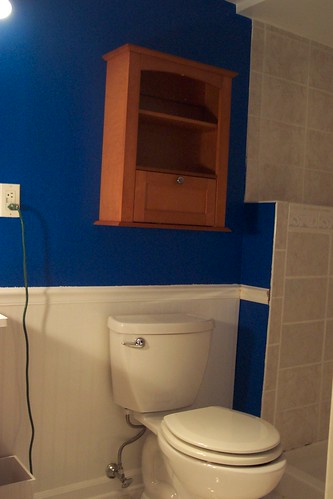
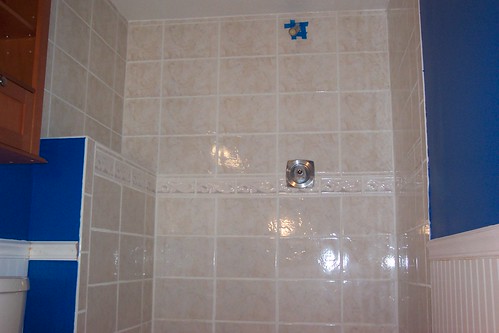
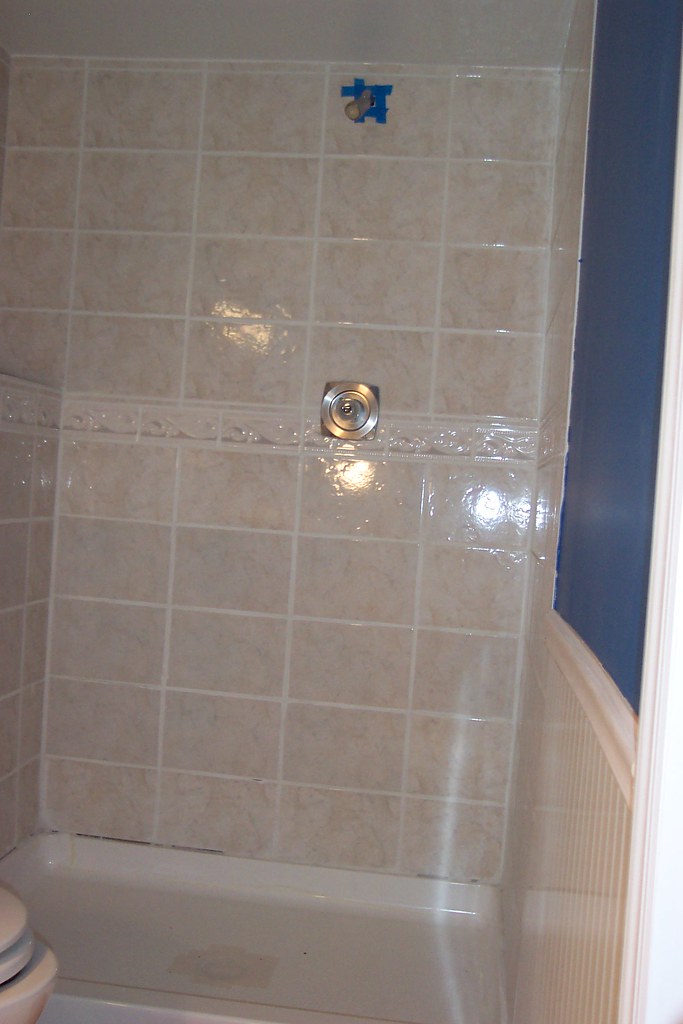
Obviously, I have some "fit and finish" work to do; installing molding, shower fixtures, painting, etc. So I will not be at full blogging immediately. I will get back to posting, and as the work diminishes on the bathroom, you should see more regular updates.
05 May 2007
A Manufactured Correction
In the May 3, 2007 edition of the Columbia Flier, Barbara Russell wrote a letter to the editor (Party endorsement in village election sets bad precedent) that begins as follows:
Reading the above paragraph, most would sympathize with Barbara. However, it should be noted that Barbara Russell’s statement above combines two sentences from two different paragraphs from the article in question. For reference, I have provided the text of the article below, and have added in bold face the two sentences that Barbara Russell references.
The first bolded sentence refers to the endorsement of Barbara Russell’s opponent, Ian Kennedy. In this paragraph, reporter Andrei Blakely quotes her directly. In my opinion, her quote in this paragraph is a brash, dismissive statement of a person that has won an election.
The second bolded statement is in a paragraph recounting Barbara Russell’s endorsement of Christopher Merdon for County Executive. Barbara is quoted indirectly here, but the statement appears to be in keeping with statements made last fall regarding her endorsement for County Executive.
What Barbara Russell’s motive was to write the letter is only for her to answer; however, it appears that Barbara Russell, having won the election to be a CA Board Member (and recently appointed Chair of the Board of Directors, kudos Barbara!) either deliberately selected parts of the article to artificially make her point or did not take the time to read the content of the article.
In the balance of her letter to the editor, Barbara Russell opens up her argument to the general case and goes on to say:
If Barbara Russell is committed to this point of democratic leader interference in Village elections, why the omission of State Delegate Liz Bobo (D)? The Liz Bobo endorsement is raised in the same Columbia Flier article. As a former Howard County Councilperson, former County Executive, and long tenured state delegate, isn’t State Delegate Liz Bobo THE democratic party leader in this county? Given that those who endorsed Barbara Russell’s opponent did so as private citizens, and Delegate Liz Bobo chose to use state funded resources to issue her endorsement, wouldn’t this be an even more egregious “bad precedent?”
In closing, I am also at a loss as to why the Columbia Flier would publish such a letter to the editor. As I have shown, Barbara Russell appears to have selected quotes (and omitted others) from different parts of the news article referenced to make her point. I would think the editors would stand by their staff’s reporting.
I am writing to correct a statement that was attributed to me in the Columbia Flier's coverage of the recent election for Columbia Council representative for Oakland Mills. The April 26 article "New wave on CA board" indicated that I agreed that the endorsement of my opponent sent out by the county executive, the County Council chairman, a delegate to the General Assembly and a former county councilman who was appointed to his current position with the county by the county executive -- all leaders of the county Democratic Party -- was not political. I did not say that.
Reading the above paragraph, most would sympathize with Barbara. However, it should be noted that Barbara Russell’s statement above combines two sentences from two different paragraphs from the article in question. For reference, I have provided the text of the article below, and have added in bold face the two sentences that Barbara Russell references.
Russell, who had not faced an opponent since 2001, was re-elected to an eighth one-year term in Oakland Mills, defeating Ian Kennedy, 302-193.
Russell won despite Kennedy's extensive list of endorsements from Columbia Democrats County Executive Ken Ulman, Del. Guy Guzzone and Howard County Council Chairman Calvin Ball. "I got the endorsement that I want and that is the endorsement of the people of the village," Russell said.
Last October Russell, a registered Democrat, crossed party lines and endorsed Republican Christopher Merdon for county executive against Ulman. But according to Russell and the politicians, the endorsements had nothing to do with county politics.
The first bolded sentence refers to the endorsement of Barbara Russell’s opponent, Ian Kennedy. In this paragraph, reporter Andrei Blakely quotes her directly. In my opinion, her quote in this paragraph is a brash, dismissive statement of a person that has won an election.
The second bolded statement is in a paragraph recounting Barbara Russell’s endorsement of Christopher Merdon for County Executive. Barbara is quoted indirectly here, but the statement appears to be in keeping with statements made last fall regarding her endorsement for County Executive.
What Barbara Russell’s motive was to write the letter is only for her to answer; however, it appears that Barbara Russell, having won the election to be a CA Board Member (and recently appointed Chair of the Board of Directors, kudos Barbara!) either deliberately selected parts of the article to artificially make her point or did not take the time to read the content of the article.
In the balance of her letter to the editor, Barbara Russell opens up her argument to the general case and goes on to say:
[t]his is not about the past election as much as it is about future elections. This is the first time in my memory that leaders of a major political party have joined together to affect the outcome of a local village community association election. I think that sets a bad precedent. The community association elections have been non-partisan in terms of the major political parties and I strongly believe they should remain that way.
While I respect the right of any individual to endorse or support a candidate for any elective office -- and as an individual I have done so myself -- I believe that the residents of Columbia's villages and the Columbia Association itself are not well served by political party endorsements or the appearance of political party endorsements. And, judging by the comments I have received from my constituents, I believe there are many people who agree with this position.
If Barbara Russell is committed to this point of democratic leader interference in Village elections, why the omission of State Delegate Liz Bobo (D)? The Liz Bobo endorsement is raised in the same Columbia Flier article. As a former Howard County Councilperson, former County Executive, and long tenured state delegate, isn’t State Delegate Liz Bobo THE democratic party leader in this county? Given that those who endorsed Barbara Russell’s opponent did so as private citizens, and Delegate Liz Bobo chose to use state funded resources to issue her endorsement, wouldn’t this be an even more egregious “bad precedent?”
In closing, I am also at a loss as to why the Columbia Flier would publish such a letter to the editor. As I have shown, Barbara Russell appears to have selected quotes (and omitted others) from different parts of the news article referenced to make her point. I would think the editors would stand by their staff’s reporting.
28 April 2007
Responding to Delegate Liz Bobo
In her Friday, April 20, 2007 email, Delegate Bobo states:
Unlimited building heights? In my opinion, that is a pretty dramatic statement. The only problem is, I never said it. Not in public, not in private. I have never written it. I have never text messaged it, I have never IM’ed it. The statement is not mine.
Since Delegate Bobo sent out her pre-election email, she has been quoted in the Columbia Flier as follows:
An interesting thing about the petition, it does not mention “unlimited” building heights. What the petition does state is an opposition to the proposed zoning amendments, and also provides supporting arguments as to why the proposed zoning amendments would be detrimental. It is this language that led me put my name on the petition. To come to the conclusion of “unlimited” building heights based on the petition implies that Delegate Liz Bobo erroneously read something into the document that does not exist on the paper.
Moreover, even basic research concerning my position on building height is readily available. As an example, Google the following search terms:
Santos building height
My blog posts on building height comes up as the second term listed. These posts have been on this blog for months, and clearly state my position.
Lastly, has this town become too big for neighborly discussion? I know that Delegate Liz Bobo has my contact information. I received her legislative update via email the other day. If Delegate Liz Bobo wanted to know my position on building height, why not just contact me directly? I believe it would have been quicker and would have provided her with primary source information.
In sharp contrast to his opponent, Phil has been strong in his support for Mary Kay Sigaty's proposals for a 150 foot height limitation in Columbia. His opponent is on record as favoring unlimited building heights.
Unlimited building heights? In my opinion, that is a pretty dramatic statement. The only problem is, I never said it. Not in public, not in private. I have never written it. I have never text messaged it, I have never IM’ed it. The statement is not mine.
Since Delegate Bobo sent out her pre-election email, she has been quoted in the Columbia Flier as follows:
Bobo said April 24 that she saw Santos' name on a petition from the group Bring Back the Vision, which advocates no height limits on downtown development, and based her comments on that document.
An interesting thing about the petition, it does not mention “unlimited” building heights. What the petition does state is an opposition to the proposed zoning amendments, and also provides supporting arguments as to why the proposed zoning amendments would be detrimental. It is this language that led me put my name on the petition. To come to the conclusion of “unlimited” building heights based on the petition implies that Delegate Liz Bobo erroneously read something into the document that does not exist on the paper.
Moreover, even basic research concerning my position on building height is readily available. As an example, Google the following search terms:
Santos building height
My blog posts on building height comes up as the second term listed. These posts have been on this blog for months, and clearly state my position.
Lastly, has this town become too big for neighborly discussion? I know that Delegate Liz Bobo has my contact information. I received her legislative update via email the other day. If Delegate Liz Bobo wanted to know my position on building height, why not just contact me directly? I believe it would have been quicker and would have provided her with primary source information.
26 April 2007
In Memoriam
Due to the loss of life in Running Brook today, I will not post today. Let us take a moment for reflection.
24 April 2007
Responding to Delegate Liz Bobo
In her Friday, April 20, 2007 email, Delegate Bobo states:
It appears that there are three criteria to refute Delegate Bobo’s above claim:
Although only Delegate Bobo can provide with any certainty whether the above criteria has been met, it must also be considered that the statement is somewhat open to consideration to the reader, a Wilde Lake resident. Delegate Bobo does hint at the criteria for “contribution” in her previous statement in her email. She alludes to Phil Kirsch’s attendance at the Charrette and his attendance at the Focus Group meetings.
Contributing to downtown development (that further enhances our community) can take several forms. The simplest form of contribution is to show up. To attend meetings, witness, and provide support. Beyond showing up, contributions can also include speaking out, signing petitions, and in more formal settings, providing oral testimony. Beyond attending meetings and rallies, contribution can be performed through writing to organizations, letters to the editor, and blogging. Please find below a brief synopsis of my contributions to downtown development to date:
Fall 2002 – I attended a Wilde Lake Village Board meeting regarding the proposed construction of the Evergreen apartments. I voiced concerns about traffic congestion, pedestrian access to and from the Mall, and concerns about new neighbors in close proximity to Merriweather Post Pavillion.
Spring 2003 – As a Wilde Lake Village Board member, I participated in a discussion on whether to support the Rouse Company petition to increase the density of Columbia from 2.35 residential units (ru)/acre to 2.5 ru/acre. I (as did the other board members) voted in opposition to the density increase.
Spring/Summer 2003 – As a Columbia resident, I participated in the Zoning Board hearing regarding the Rouse Company petition to increase the density of Columbia from 2.35 ru/acre to 2.5 ru/acre. I presented testimony to the Zoning Board in opposition to the proposal. I also cross-examined supporters of the proposal, including then Rouse Company Vice-President Dennis Miller.
Spring/Summer 2003 – I also became a supporter of Save Merriweather. I still wear my T-shirt to this day with pride.
Spring 2005 – I attended the General Growth Properties Downtown Columbia Town Meetings (1 and 2). I submitted several questions to the presenters and was singled out by then General Growth Properties Vice-President Dennis Miller for repeatedly asking about water and sewer infrastructure, and the specific plans for the increased demand.
Fall 2005 – I attended all Charrette meetings and participated to the fullest extent possible. On the 2nd night, during resident input, I spoke out regarding the so-called “secondary study area,” the piece of land that is bounded by Little Patuxent Parkway, Harpers Farm Road, Twin Rivers Road, and Governor Warfield Parkway. This area contains the Wilde Lake Village Center, condominiums, and affordable housing complexes. I was concerned that the “secondary study area” was, according to Charrette event organizers, slated for development on a much shorter time horizon (10 years) than downtown development and no resources had been committed or discussed.
January 2006 – I attended Delegate Liz Bobo’s Town Hall meeting regarding downtown development. Because of a shortage of seating, I literally sat at her feet. I signed her petition calling for:
February 2006 – I attended the Post Charrette Town Hall Meeting. During the resident statement section of the program, I spoke out for the need to change the Howard County Board of Education site in Faulkner Ridge back to an elementary school site to support children that may potentially live in the downtown area in the future. I also proposed that if any new streets are to placed in downtown Columbia, the streets should have their names taken from the works of Michael Chabon, a Pulizer Prize winning author that grew up in Columbia.
March 2006 – I attended Delegate Liz Bobo’s small group workshop on downtown Columbia at Kahler Hall. I listened, asked questions (specifically about traffic) and discussed the issues with people after the meeting.
Spring/Summer 2006 – I became a member of the Wilde Lake Downtown Task Force. I participated in discussions about public safety, making Governor Warfield Parkway a scenic road, traffic and schools. I provided meaningful input for a survey created by the task force. It should be noted that the Wilde Lake Downtown Task Force is one of two groups that takes credit for getting the Governor Warfield Parkway/Scenic Road question asked at the Kahler Hall 2006 Candidates Night for County Executive/County Council.
March 2006 – October 2006 – I attended a few Focus Group meetings. For those that do not recall, the meetings were held during normal working hours, and made it difficult for those that work standard hours to attend. Initial meetings did not allow resident input. I also downloaded all Focus Group presentations and documents. I reviewed the documents and participated in the Focus Group by emailing the Howard County Department of Planning and Zoning with my comments.
September 2006 – I started the Columbia Compass blog and addressed (among other things) issues related to downtown development and building heights.
In addition, I have used my blog to track the work of General Growth Properties in other areas of the nation. I have also tried to keep abreast of the presentations they have made at national conferences with regard to mixed use development. I believe that their work in other areas may provide insight into their plans for downtown Columbia. I know of no other person doing this type of research.
October 2006 – I attended a Howard County Council meeting and testified in favor of making Governor Warfield Parkway a scenic road.
Winter 2006/2007 –I attended all of the General Growth Properties/HCC sponsored Voices of Vision lecture series. In addition, I submitted written questions to the guest speakers and also posted blog entries based on Ann Forsyth’s and Adam Lerner’s lectures.
What is positive?
Once again, positive is a somewhat subjective criteria. Without any further definition, it is difficult to determine what is absolutely positive and what is not. In an effort to address the charge, I will provide a brief list of at least what I would define as positive aspects of my contributions:
Awareness
With respect to Delegate Liz Bob’s awareness of my contribution to the downtown discussion, I am at a loss. Suffice it to say, at almost every meeting listed above, Delegate Bobo and I had the chance to say hello to each other. For more specific data:
At the Wilde Lake Village Board meeting regarding the construction of the Evergreen apartments, I sat directly behind Delegate Bobo and her husband.
I believe Delegate Bobo was in the room when I testified at the Zoning Board in opposition to the Rouse Company density increase. I know she was in the room when former Rouse Company Vice-President Dennis Miller testified and was cross-examined (by myself and others).
During the Charrette, I recall two specific instances in which Delegate Bobo and I had contact: The first was during the speakout portion of the Charrette, I had asked the question about the secondary development area in the following way – “I want to thank the Design Collective for all their hard work over the last two days, but I have some concerns…” After my time at the mike, Delegate Bobo came over to me and said that she really enjoyed the way I ask questions. Secondly, during the third meeting activities, we were broken up into small groups, and I was in a group with Delegate Bobo’s husband. I recall this quite clearly, because it was at that time that I lent him my copy of Ann Forsyth’s book Rebuilding Suburbia, a book that describes (among other cities) Columbia’s development and rates it against New Urbanist development (we do pretty darn well, by the way).
At her January 2006 Town Hall meeting, I not only sat at her feet, but I was the one who gingerly, carefully, carried her Mort Hoppenfeld print to her car. At her March 2006 downtown workshop, I commented that I had seen in the press and heard among people that they were “angry” about downtown development, and asked Delegate Bobo how to reduce this kind of language. She responded that she hoped that she had not used the word angry, and asked that I count the times she used the word. She also asked that I count the times she used the words peace and hope.
I suppose all of this could have been forgotten, but I believe Delegate Bobo is a smart person and has a sharp mind. Given this level of interaction, I would have to believe that she is cognizant of these past interactions.
In summary, I believe that I have presented a wealth of contributions to the downtown discussion, most of it positive in nature, and at least some of it in direct interaction with Delegate Bobo. So I will respectfully ask at this point, why would she write such a statement?
I am not aware of Phil's opponent's having contributed in any positive way to the efforts to make sure that further Downtown development enhances our community.
It appears that there are three criteria to refute Delegate Bobo’s above claim:
- I must have contributed to downtown development
- That contribution must have been positive
- Delegate Bobo would have to be aware of the positive contribution.
Although only Delegate Bobo can provide with any certainty whether the above criteria has been met, it must also be considered that the statement is somewhat open to consideration to the reader, a Wilde Lake resident. Delegate Bobo does hint at the criteria for “contribution” in her previous statement in her email. She alludes to Phil Kirsch’s attendance at the Charrette and his attendance at the Focus Group meetings.
Contributing to downtown development (that further enhances our community) can take several forms. The simplest form of contribution is to show up. To attend meetings, witness, and provide support. Beyond showing up, contributions can also include speaking out, signing petitions, and in more formal settings, providing oral testimony. Beyond attending meetings and rallies, contribution can be performed through writing to organizations, letters to the editor, and blogging. Please find below a brief synopsis of my contributions to downtown development to date:
Fall 2002 – I attended a Wilde Lake Village Board meeting regarding the proposed construction of the Evergreen apartments. I voiced concerns about traffic congestion, pedestrian access to and from the Mall, and concerns about new neighbors in close proximity to Merriweather Post Pavillion.
Spring 2003 – As a Wilde Lake Village Board member, I participated in a discussion on whether to support the Rouse Company petition to increase the density of Columbia from 2.35 residential units (ru)/acre to 2.5 ru/acre. I (as did the other board members) voted in opposition to the density increase.
Spring/Summer 2003 – As a Columbia resident, I participated in the Zoning Board hearing regarding the Rouse Company petition to increase the density of Columbia from 2.35 ru/acre to 2.5 ru/acre. I presented testimony to the Zoning Board in opposition to the proposal. I also cross-examined supporters of the proposal, including then Rouse Company Vice-President Dennis Miller.
Spring/Summer 2003 – I also became a supporter of Save Merriweather. I still wear my T-shirt to this day with pride.
Spring 2005 – I attended the General Growth Properties Downtown Columbia Town Meetings (1 and 2). I submitted several questions to the presenters and was singled out by then General Growth Properties Vice-President Dennis Miller for repeatedly asking about water and sewer infrastructure, and the specific plans for the increased demand.
Fall 2005 – I attended all Charrette meetings and participated to the fullest extent possible. On the 2nd night, during resident input, I spoke out regarding the so-called “secondary study area,” the piece of land that is bounded by Little Patuxent Parkway, Harpers Farm Road, Twin Rivers Road, and Governor Warfield Parkway. This area contains the Wilde Lake Village Center, condominiums, and affordable housing complexes. I was concerned that the “secondary study area” was, according to Charrette event organizers, slated for development on a much shorter time horizon (10 years) than downtown development and no resources had been committed or discussed.
January 2006 – I attended Delegate Liz Bobo’s Town Hall meeting regarding downtown development. Because of a shortage of seating, I literally sat at her feet. I signed her petition calling for:
specific, hard data relating to housing, schools, traffic, roads, water and sewer, environment, fiscal responsibility, as well as phasing and monitoring of the proposed development be studied and made available to the public BEFORE the Draft Master Plan for Downtown Columbia is presented to the Planning Board and the County Council.
February 2006 – I attended the Post Charrette Town Hall Meeting. During the resident statement section of the program, I spoke out for the need to change the Howard County Board of Education site in Faulkner Ridge back to an elementary school site to support children that may potentially live in the downtown area in the future. I also proposed that if any new streets are to placed in downtown Columbia, the streets should have their names taken from the works of Michael Chabon, a Pulizer Prize winning author that grew up in Columbia.
March 2006 – I attended Delegate Liz Bobo’s small group workshop on downtown Columbia at Kahler Hall. I listened, asked questions (specifically about traffic) and discussed the issues with people after the meeting.
Spring/Summer 2006 – I became a member of the Wilde Lake Downtown Task Force. I participated in discussions about public safety, making Governor Warfield Parkway a scenic road, traffic and schools. I provided meaningful input for a survey created by the task force. It should be noted that the Wilde Lake Downtown Task Force is one of two groups that takes credit for getting the Governor Warfield Parkway/Scenic Road question asked at the Kahler Hall 2006 Candidates Night for County Executive/County Council.
March 2006 – October 2006 – I attended a few Focus Group meetings. For those that do not recall, the meetings were held during normal working hours, and made it difficult for those that work standard hours to attend. Initial meetings did not allow resident input. I also downloaded all Focus Group presentations and documents. I reviewed the documents and participated in the Focus Group by emailing the Howard County Department of Planning and Zoning with my comments.
September 2006 – I started the Columbia Compass blog and addressed (among other things) issues related to downtown development and building heights.
In addition, I have used my blog to track the work of General Growth Properties in other areas of the nation. I have also tried to keep abreast of the presentations they have made at national conferences with regard to mixed use development. I believe that their work in other areas may provide insight into their plans for downtown Columbia. I know of no other person doing this type of research.
October 2006 – I attended a Howard County Council meeting and testified in favor of making Governor Warfield Parkway a scenic road.
Winter 2006/2007 –I attended all of the General Growth Properties/HCC sponsored Voices of Vision lecture series. In addition, I submitted written questions to the guest speakers and also posted blog entries based on Ann Forsyth’s and Adam Lerner’s lectures.
What is positive?
Once again, positive is a somewhat subjective criteria. Without any further definition, it is difficult to determine what is absolutely positive and what is not. In an effort to address the charge, I will provide a brief list of at least what I would define as positive aspects of my contributions:
- Attending meetings at the village, city, and county level with regard to downtown Columbia.
- Testifying against and cross examining supporters during the 2003 Rouse Company petition to the Zoning Board to increase density without a specific, detailed plan.
- Signing Delegate Bobo’s petition for data on traffic, housing, water and sewer, etc…
- Testifying in support of the Governor Warfield Parkway scenic road resolution.
- Attending the Charrette.
- Participating in the Focus Group discussion.
- Asking questions at meetings about key areas, such as density, traffic, water and sewer service, affordable housing, etc…
- Originating the idea for naming streets from the works of Michael Chabon.
- Advocating for the return of Faulkner Ridge elementary school to support educating children who may move into downtown.
Awareness
With respect to Delegate Liz Bob’s awareness of my contribution to the downtown discussion, I am at a loss. Suffice it to say, at almost every meeting listed above, Delegate Bobo and I had the chance to say hello to each other. For more specific data:
At the Wilde Lake Village Board meeting regarding the construction of the Evergreen apartments, I sat directly behind Delegate Bobo and her husband.
I believe Delegate Bobo was in the room when I testified at the Zoning Board in opposition to the Rouse Company density increase. I know she was in the room when former Rouse Company Vice-President Dennis Miller testified and was cross-examined (by myself and others).
During the Charrette, I recall two specific instances in which Delegate Bobo and I had contact: The first was during the speakout portion of the Charrette, I had asked the question about the secondary development area in the following way – “I want to thank the Design Collective for all their hard work over the last two days, but I have some concerns…” After my time at the mike, Delegate Bobo came over to me and said that she really enjoyed the way I ask questions. Secondly, during the third meeting activities, we were broken up into small groups, and I was in a group with Delegate Bobo’s husband. I recall this quite clearly, because it was at that time that I lent him my copy of Ann Forsyth’s book Rebuilding Suburbia, a book that describes (among other cities) Columbia’s development and rates it against New Urbanist development (we do pretty darn well, by the way).
At her January 2006 Town Hall meeting, I not only sat at her feet, but I was the one who gingerly, carefully, carried her Mort Hoppenfeld print to her car. At her March 2006 downtown workshop, I commented that I had seen in the press and heard among people that they were “angry” about downtown development, and asked Delegate Bobo how to reduce this kind of language. She responded that she hoped that she had not used the word angry, and asked that I count the times she used the word. She also asked that I count the times she used the words peace and hope.
I suppose all of this could have been forgotten, but I believe Delegate Bobo is a smart person and has a sharp mind. Given this level of interaction, I would have to believe that she is cognizant of these past interactions.
In summary, I believe that I have presented a wealth of contributions to the downtown discussion, most of it positive in nature, and at least some of it in direct interaction with Delegate Bobo. So I will respectfully ask at this point, why would she write such a statement?
Delegate Liz Bobo
As a former candidate, I understand that negative campaigning is part of the deal; however, I believe the misrepresentation of my positions and mischaracterization of my actions by Delegate Liz Bobo leaves a decidedly false impression with the residents of Wilde Lake. I feel it is necessary to post her email and provide the community with my actual positions and actions to restore my name.
In a message dated 4/20/2007 2:23:32 P.M. Eastern Daylight Time, Delegate.E.Bobo@house.state.md.us writes:
In a message dated 4/20/2007 2:23:32 P.M. Eastern Daylight Time, Delegate.E.Bobo@house.state.md.us writes:
Dear Friends,
I have given a lot of thought to whether to send this message to people I know who live in Wilde Lake. My conclusion is that there is too much at stake not to send it.
Lloyd and I own property in Wilde Lake, and we are voting for Phil Kirsch to be re-elected to the Columbia Association Board of Directors. Voting is a personal action, I realize, and I want to share our reasoning with you.
The future development of Downtown Columbia is by far the most important issue facing us. Phil Kirsch has been involved in the process from the beginning, attending the Charrette and then serving with me as a member of the County's Focus Group. He has made it clear that further development should benefit those of us who are already here, not just the developers.
Phil advocated with me in insisting that the county have a thorough traffic study performed before moving forward with its plans for 5500 new residential units in Downtown. That traffic study revealed that such a plan would result in gridlock. Phil played a key role in advocating for the county to designate Governor Warfield Parkway as a scenic road to protect its beautiful trees and median. As a result, the county can no longer make this road the main through way to handle Downtown traffic.
I am not aware of Phil's opponent's having contributed in any positive way to the efforts to make sure that further Downtown development enhances our community.
In sharp contrast to his opponent, Phil has been strong in his support for Mary Kay Sigaty's proposals for a 150 foot height limitation in Columbia. His opponent is on record as favoring unlimited building heights.
During this development process it will be more important than ever for the Columbia Association Board to do the people's work in an open manner. They have held too many closed meetings in recent years. More than any other member, Phil Kirsch has voted to keep CA meetings open.
As an elected representative myself, I found it quite disturbing that Phil's opponent recently publicly called for the removal of two CA Board members who had come out in support of a candidate in last fall's election. Though that candidate was of a different political party than mine, I fully support the right of all individuals to engage in the political process and to support the candidates of their choice. The two CA Board members were completely exonerated, and should never have been castigated in that way.
Phil Kirsch has demonstrated that he is a hard working, independent representative who does not seek the limelight. He has the courage of his convictions and puts the people's interest over those of the CA corporation. We need Phil to continue his fine work.
Please join us in voting for Phil at Slayton House tomorrow, Saturday, April 21, between 9am and 3pm. Please encourage your neighbors to do likewise, as turnout will be crucial in this election.
I look forward to continuing to work with you to make Columbia an even better community.
~Liz
23 April 2007
Election recap
As most in the Columbia, Maryland vicinity already know, I lost the Wilde Lake Columbia Council Representative election on Saturday. I would like to thank the residents of Wilde Lake for inviting me into their homes over the last month to talk about the issues. I would like to thank the Wilde Lake Election Committee for conducting the elections well. Lastly, I would like to thank Phil Kirsch for conducting himself well during this campaign season. Regrettably, one of his supporters mounted a (relatively) large negative campaign at the last minute and misrepresented both my experience and my position on issues (more on this later).
So with the one exception, let us all move forward as a Village, community, and city to make Columbia a great place to live now and in the future.
So with the one exception, let us all move forward as a Village, community, and city to make Columbia a great place to live now and in the future.
17 April 2007
An Eleventh Hour Suggestion
Just wondering. It is not normal protocol, but perhaps the County would see its way to televise the Planning Board hearing tonight. Considering (even with carpooling) that parking will be a premium tonight, using television would make the hearing available to an audience beyond the capacity of the Banneker Room.
In other news, the Wilde Lake Village Board and Columbia Council Representative candidate's night is tonight at Slayton House.
In other news, the Wilde Lake Village Board and Columbia Council Representative candidate's night is tonight at Slayton House.
02 April 2007
The Current Alternative to Downtown Development
Ok, we are almost into Tuesday of this week, but there was and article in last week’s Columbia Flier (Restaurant park open for business, Plaza offers wide variety of fare) by reporter Mike Santa Rita that has been bugging me.
The article relates the new food offerings at a strip mall development (the “MaGaw Plaza”) tucked between Apple Ford and Gramaphone on MaGaw Road. This collection of eateries (and a JHUAPL Credit Union) is billed as:
My primary concern is the lack of connectivity. Yes, there are some sidewalks nearby, but most just end and do not easily link the nearby office buildings. The result is that most patrons, either lunch or dinner crowd, will be driving to the strip mall and driving away after. It seems that is the only way to use the center.
Secondly, the variety of fare offered is a little disappointing. In the interest of full disclosure, I have been to Greene Turtle and Orinoco (once, each, not in the same day), but an auto-dependent retail center that traffics in hamburgers, pizza, and burritos seems to be two wrongs that don’t make a right. (OK, yes, Greene Turtle has some salads, Atlanta Bread is not a really not a den of cholesterol)
Moreover, with very similar establishments nearby, we have to be near saturation in the fast-casual market. With respect to hamburgers, we already have a Ruby Tuesdays, Red Robin, Rocky Run, and Fuddruckers; all which have extensive hamburger menus. In the world of burritos, the Snowden Corridor already has Chipotle’s, Qdobas, Baja Fresh, Frisco Grille and Cantina (really, the only choice for burritos in Columbia), and now California Tortilla.
Lastly, the strip mall sits on land that was once designated the “Owen Brown Industrial Park.” This area was supposed to contain light manufacturing concerns and warehouses. Where people would be paid a wage that would allow some to live reasonably nearby. Now this piece of land contains many jobs that pay the minimum wage (or less for waiters).
As I said before, I have visited the establishments there, and will one day return. I’m just not feeling too good about it. Save me a parking space.
The article relates the new food offerings at a strip mall development (the “MaGaw Plaza”) tucked between Apple Ford and Gramaphone on MaGaw Road. This collection of eateries (and a JHUAPL Credit Union) is billed as:
The site is designed to attract a lunch crowd from nearby office buildings and evening diners from surrounding residential neighborhoods, as well as patrons of the United Artists movie theater on nearby Robert Fulton Drive, according to [Manekin Senior Developer David] Meiners.
"We tried to get a mix of variety so there are different types of food to suit different tastes," Meiners said. "We're pretty comfortable that somebody could go to dinner at Greene Turtle and get a coffee at Orinoco and a dessert at Smoothie King."
My primary concern is the lack of connectivity. Yes, there are some sidewalks nearby, but most just end and do not easily link the nearby office buildings. The result is that most patrons, either lunch or dinner crowd, will be driving to the strip mall and driving away after. It seems that is the only way to use the center.
Secondly, the variety of fare offered is a little disappointing. In the interest of full disclosure, I have been to Greene Turtle and Orinoco (once, each, not in the same day), but an auto-dependent retail center that traffics in hamburgers, pizza, and burritos seems to be two wrongs that don’t make a right. (OK, yes, Greene Turtle has some salads, Atlanta Bread is not a really not a den of cholesterol)
Moreover, with very similar establishments nearby, we have to be near saturation in the fast-casual market. With respect to hamburgers, we already have a Ruby Tuesdays, Red Robin, Rocky Run, and Fuddruckers; all which have extensive hamburger menus. In the world of burritos, the Snowden Corridor already has Chipotle’s, Qdobas, Baja Fresh, Frisco Grille and Cantina (really, the only choice for burritos in Columbia), and now California Tortilla.
Lastly, the strip mall sits on land that was once designated the “Owen Brown Industrial Park.” This area was supposed to contain light manufacturing concerns and warehouses. Where people would be paid a wage that would allow some to live reasonably nearby. Now this piece of land contains many jobs that pay the minimum wage (or less for waiters).
As I said before, I have visited the establishments there, and will one day return. I’m just not feeling too good about it. Save me a parking space.
Destination: Consumption
Now that it is April, we can look forward to Downtown Columbia Plan Season. As noted here, General Growth Properties plans to unveil its plans for downtown during April, May, or June. Howard County is also expected to put forth its plan during the same timeframe. So what can we expect? Clearly, all theories are pure speculation at this point; however, there are some guideposts that will allow some educated tea-leaf reading.
Earlier this year I posted a piece on General Growth Properties expansion of the Natick Mall. This project included an expansion of retail and dining at the Natick Mall and the construction of Condos on the mall property. Given the similarities between Natick and Columbia, I believe it is possible that General Growth may attempt to replicate the Natick project here as part of their stated intent to expand the mall. I believe the tell-tale sign will be if General Growth proposes to change the name of the Mall in Columbia. In Natick, General Growth first attempted to change the name from “Natick Mall” to “Natick.” After experiencing local opposition, General Growth settled on the name “the Natick Collection.”
Another piece of the puzzle may have been revealed at the March 8-9, 2007 Hotel Developers Conference in Rancho Mirage, CA. As reported on HospitalityNet, representatives from General Growth Properties touted the success of hotel/mixed use development.
The above-linked piece on HospitalityNet.com also includes slides direct from General Growth Properties to describe the magnitude of profit to be made with hotel/mixed use. I strongly encourage all to link and view, but here is a summary (as reported on HospitalityNet.com):
Once again, I have to stress that any connection between the above mentioned material and Columbia is purely speculation; however, if this was presented with an eye toward the “garden of people,” where would this type of development find itself in Downtown Columbia? If I was using house money, I would say that it would wind up on the Crescent Property.
Taken to the hypothetical end, we need to start asking some serious questions here. Not just questions about height or number of traffic lanes, but deeper, fundamental questions. Would this type of development be complimentary to Columbia in any way? Would a boutique or five-star hotel, with possible condos and surrounded by retail become an island, or could it be integrated into the general pedestrian plan?
Beyond these (and other, unmentioned questions), a broader class of questions should also be addressed. Columbia was founded and has been in my lifetime an experiment that has resided in the alchemist wing of modern planning. Whether it is mixed income housing, interfaith centers, or the village concept; we the population of Columbia expect innovation and typically deride the importation of ideas from elsewhere. At what point would condos at the Mall in Columbia become our own and not be “Natick South?” Where is the dividing line between a hotel/condo/retail complex that is truly Columbian, and not just “the Woodlands on the Little Patuxent?”
Earlier this year I posted a piece on General Growth Properties expansion of the Natick Mall. This project included an expansion of retail and dining at the Natick Mall and the construction of Condos on the mall property. Given the similarities between Natick and Columbia, I believe it is possible that General Growth may attempt to replicate the Natick project here as part of their stated intent to expand the mall. I believe the tell-tale sign will be if General Growth proposes to change the name of the Mall in Columbia. In Natick, General Growth first attempted to change the name from “Natick Mall” to “Natick.” After experiencing local opposition, General Growth settled on the name “the Natick Collection.”
Another piece of the puzzle may have been revealed at the March 8-9, 2007 Hotel Developers Conference in Rancho Mirage, CA. As reported on HospitalityNet, representatives from General Growth Properties touted the success of hotel/mixed use development.
Hotel mixed-use has emerged as one of the few ways hotel developers may be able to make a new development economically feasible, with skyrocketing construction costs. It has also become one of the hottest things going as developers of other real estate uses (shopping centers, office, retail, residential and entertainment) discover the big “IRR Premiums” that may harvested from well-planned and tightly integrated hotel mixed-use projects.
And that is why General Growth Properties (one of the largest owners of shopping malls in the world) is looking at its 200+ malls and retail centers to see where it can accomplish superior results — and believes that it may have identified 80 opportunities.
The above-linked piece on HospitalityNet.com also includes slides direct from General Growth Properties to describe the magnitude of profit to be made with hotel/mixed use. I strongly encourage all to link and view, but here is a summary (as reported on HospitalityNet.com):
- General Growth Properties has found that 32% of U.S. domestic leisure travel activities are spent on shopping. This represents a trip volume of 490.1 million trips, with an average of $372 per household spent on each trip (excluding the transportation). An amazing 77% of those trips were overnight, and averaged 2.9 nights at a hotel.
- Understanding this in the terms of a specific project, like the Dallas Galleria Mall is an interesting exercise. This chart shows how only 32% of the Dallas Galleria’s business came from local shoppers, and 32% of the business came from customers 50 miles away or more.
- the benefit of hotel mixed-use flows both ways — each component of the mixed-use project enhances and improves the other. So here is GGP’s analysis of the enhanced performance of its office component at The Woodlands, their MPC in Houston.
- Certainly some of the benefit is attributed to superior product, and to limited supply in a Master Planned Community. Nonetheless, a 1% vacancy factor compared to 12-14% in the immediately surrounding market areas, and average rent premiums of at least 30% are pretty strong evidence for the value of hotel mixed-use. (These figures -- and others --shared by GGP execs at The Hotel Developers Conference® earlier this month created a flurry of interest among participants!)
- And if the earlier synergies of leisure travelers loving to shop were lost on you, here is a chart showing how GGP figures that its retail sales increased by more than 403% from 1995 to 2006 — at least in significant part because of the hotel mixed-use nature of the project (and also all the usual developer’s points of pride, including superior design, location, and exclusivity created in an MPC[Master Planned Community]).
Once again, I have to stress that any connection between the above mentioned material and Columbia is purely speculation; however, if this was presented with an eye toward the “garden of people,” where would this type of development find itself in Downtown Columbia? If I was using house money, I would say that it would wind up on the Crescent Property.
Taken to the hypothetical end, we need to start asking some serious questions here. Not just questions about height or number of traffic lanes, but deeper, fundamental questions. Would this type of development be complimentary to Columbia in any way? Would a boutique or five-star hotel, with possible condos and surrounded by retail become an island, or could it be integrated into the general pedestrian plan?
Beyond these (and other, unmentioned questions), a broader class of questions should also be addressed. Columbia was founded and has been in my lifetime an experiment that has resided in the alchemist wing of modern planning. Whether it is mixed income housing, interfaith centers, or the village concept; we the population of Columbia expect innovation and typically deride the importation of ideas from elsewhere. At what point would condos at the Mall in Columbia become our own and not be “Natick South?” Where is the dividing line between a hotel/condo/retail complex that is truly Columbian, and not just “the Woodlands on the Little Patuxent?”
13 March 2007
Things are (Possibly) Changing
Possible Big Changes at WCI
This morning, billionaire Carl C. Icahn announced that he has initiated a bid to purchase WCI Communities, Inc. The announcement has been widely reported by news agencies including Forbes, and Reuters. According to businessweek.com, the terms are as follows:
In an August 17, 2005 article in the Washington Post, reporter Steven Pearlstein, wrote a feature article (Icahn's Short Vision Doesn't Fit Time Warner's Long-Term Needs) on Mr. Icahn. The article begins as follows:
And,
However, one article does not paint a full picture. To be fair, Mr. Icahn does fund a charter school in the Bronx, New York and has a family foundation based in Princeton, New Jersey.
In Other WCI News:
Last evening, the Associated Press released a story about green building technology and the future demand for such buildings. The story goes on to say that many home construction companies are behind the curve with respect to designing and construction green buildings. However, the article does state the following:
The full article can be viewed here on the MSNBC website.
This morning, billionaire Carl C. Icahn announced that he has initiated a bid to purchase WCI Communities, Inc. The announcement has been widely reported by news agencies including Forbes, and Reuters. According to businessweek.com, the terms are as follows:
The offer by High River LP and entities managed by Icahn Management LP is not subject to any minimum condition, due diligence or financing. The purchase price represents a 16 percent premium to the stock's Monday closing price.Also,
Closing is subject to conditions including redemption of the company's recently adopted "poison pill," which is designed to ward off hostile takeovers.
If the current board tries to block the conditions from being satisified, Icahn said he plans to leave the bid open and have his proposed board nominees, if elected, satisfy the conditions so that the offer can be completed.Some Background on Mr. Carl C. Icahn:
In an August 17, 2005 article in the Washington Post, reporter Steven Pearlstein, wrote a feature article (Icahn's Short Vision Doesn't Fit Time Warner's Long-Term Needs) on Mr. Icahn. The article begins as follows:
Normally, when investors don't think a company is well run, they sell its shares
and buy something else. And then there's Carl Icahn, whose instinct when he sees a badly run company is to buy a big position, try to force its management to do whatever it takes to quickly boost the stock price and then sell out.
Back in the 1980s and '90s, Icahn was called a greenmailer, a corporate raider, a vulture capitalist. His targets included Texaco, U.S. Steel, TWA, Pan Am and RJR Nabisco, and while some of his efforts were spectacular failures, enough were successful that he became a billionaire several times over.
Whatever you think of Icahn and other such corporate buccaneers, having a few of them around has helped keep corporate managers and directors on their toes, lest they become the next target. Which is why, in the post-Enron era, Icahn has embarked on a not-wholly-convincing effort to rebrand himself as a "shareholder activist" dedicated to improving corporate governance even as he enhances the efficiency of capital markets.
Now, after raising at least $2 billion for his own "activist" hedge fund and forming alliances with several others, the 69-year-old Icahn is back. He has already humiliated Blockbuster in a proxy fight by knocking its chief executive off the board of directors. He has forced the energy firm Kerr-McGee to curtail exploration and sell its North Sea assets while browbeating Mylan Laboratories into scrubbing its purchase of King Pharmaceuticals. And he has demanded that Siebel Systems distribute its $2 billion stash of cash to shareholders.
And,
In all of these recent cases, Icahn chose companies that had recently made mistakes or whose stock prices had either declined or languished. But it is also true that, in every case, managers and directors had been actively engaged in trying to put things right, either with new strategies, new management or both. Icahn's arrival on the scene looks more like a story of piling on, or kicking a company when it is down, than it does one of no-nonsense investor exposing inept managers who ignore shareholders and sit on their duffs.
Icahn's basic strategy for these companies is pretty simple -- and simple-minded: Stop investing in new products, new markets or acquisitions, sell off what you can and send as much cash as possible back to shareholders in the form of dividends and stock buybacks.
However, one article does not paint a full picture. To be fair, Mr. Icahn does fund a charter school in the Bronx, New York and has a family foundation based in Princeton, New Jersey.
In Other WCI News:
Last evening, the Associated Press released a story about green building technology and the future demand for such buildings. The story goes on to say that many home construction companies are behind the curve with respect to designing and construction green buildings. However, the article does state the following:
Among the early adopters are two smaller homebuilders, Los Angeles-based Pardee Homes and Florida-based WCI Communities Inc. While they are much smaller than homebuilders like Hovnanian, KB Home and others, they also build mainly where consumers have been more receptive to green building practices.
The full article can be viewed here on the MSNBC website.
10 March 2007
Just Wondering
Was anyone else contacted by Mid-Atlantic Research regarding a survey on downtown Columbia?
Was anyone able to find out who sponsored the survey?
Was anyone able to find out who sponsored the survey?
07 March 2007
Computer Aided Design
What does high, low, and medium density look like? What is the projected long term effect of continuing our current building practices versus building dense in certain areas? These questions can be answered (in part) online. Two tools of mention are the Lincoln Institute of Land Policy's Visualizing Density web page (I wrote about it here) and a new tool written up on the Just Up the Pike blog (a very interesting blog from out of Silver Spring!).
MetroQuest is a new "scenario-planning" program aimed to help communities better plan for their future by showing the eventual outcomes of today's planning decisions.If anyone is looking to get a better feel for the results of planning decisions, I strongly suggest you check out both tools.
For the Consideration of Wilde Lake Residents
I have submitted my candidacy petition for Wilde Lake Columbia Council Representative.

05 March 2007
"I said 'Let them truckers roll, ten-four!'"
Hayduke can inspire.
But seriously, I have not been neglecting the blog world. I wanted to keep the golf cart issue at the top of the page for a few days. Regardless of where you stand on the issue, the CA Board of Directors' Planning and Strategy Committee has the golf cart issue on its agenda (PDF) for Thursday, March 8, 2007 (it is item #7 on the agenda). The meeting will be held at the Columbia Association Building (aka, the Teachers Building), 10221 Wincopin Circle at 7:00 PM. It is my hope that residents will turn out to engage the committee in a discussion about the pros and cons of putting golf carts on Columbia's path system. I hope to see you all there.
But seriously, I have not been neglecting the blog world. I wanted to keep the golf cart issue at the top of the page for a few days. Regardless of where you stand on the issue, the CA Board of Directors' Planning and Strategy Committee has the golf cart issue on its agenda (PDF) for Thursday, March 8, 2007 (it is item #7 on the agenda). The meeting will be held at the Columbia Association Building (aka, the Teachers Building), 10221 Wincopin Circle at 7:00 PM. It is my hope that residents will turn out to engage the committee in a discussion about the pros and cons of putting golf carts on Columbia's path system. I hope to see you all there.
27 February 2007
Coming Soon to Your Backyard: Ricky Bobby, Hummers, and the Grey Line
Town Center resident Joel Broida and Thunder Hill resident Paul Verchinski have been lobbying the CA Board of Directors to change the bike path policy to allow golf carts on the paths. Each has taken a different approach to motorizing the bike paths, Mr. Broida would like to create a golf cart shuttle system, using carts (manufactured by Daimler-Chrysler) that can carry 6-8 passengers, to and from the grocery store (for those Villages that currently do not have a grocery story in their village). Mr. Broida has gone on to state that when grocery stores are in all of the village centers, the multi-passenger golf carts could be used to conduct tours in Columbia. Mr. Verchinski would like a general use for all residents (with a minimum age requirement) to use golf carts on the bike paths for shopping, recreation, and enhanced mobility for seniors.
Where I think they agree is in their tone and the perceived benefit to the community. Both men have been aggressive in their positions. At the January CA Board of Directors meeting, Mr. Broida asked that a policy change to allow golf carts be instituted by the end of February. Mr. Verchinski, addressing the full board for the second continuous month, began his resident speakout session by stating (and I’m paraphrasing here) “I am back again this month because I was here last month and I have not seen any movement on this issue.” Both men tout the use of golf carts as a means to aid those who are aging in place and to reduce air pollution.
What I do not think they have realized is the unintended consequences of motorizing the bike paths. As they describe it, the golf carts would be used primarily to allow aging residents to extend their mobility. To go shopping, or visit a good friend. Contrast that with the following from a November 26, 2006 article in the Washington Post, written by Dan Morse (Carts Are in Demand, but Who Said Anything About Golfing?):
In addition, golf carts for non-golf course use have over the years been customized:
And
At times speed goes beyond just the look of the golf cart. The November/December 2006 issue of the above mentioned Golf Car Advisor magazine has a feature article on high performance golf cart electric motors. The article leads off as follows:
From my point of view, I see additional problems related to infrastructure, regulation, and safety.
With respect to infrastructure, the Columbia bike path system consists largely of narrow asphalt ribbons that connect the Villages. Many of these paths are located in floodplains, traverse steep slopes, and have many blind curves. To accommodate a fleet of golf carts, most pathways would have to be widened (making them closer to resident’s side and back yards). With respect to slopes, either the grade would have to be changed or a major investment in signage (and driver training/orientation) would have to be made to alert golf cart owners that passage is prohibited. In the case of floodplains, I would suspect little could be done, with the exception of signage indicating a possible flood condition.
In addition, a good deal of the path system is nestled up close to homeowner’s backyards. Many purchased homes with the understanding that the paths would be used by children walking to school, bicyclists, and others walking the paths for pleasure and recreation. I doubt many envisioned the path as a motorized throughway. On a related note, the use of the path system by registered cars and micro-mini bikes is infrequent, but not unheard of. Would the acquiescence to golf cart use only encourage this illegal behavior?
With regard to regulation, I believe golf carts are already legal to drive on Howard County roads with posted speeds less than 30 mph. Would the county requirements be sufficient for use on the privately-owned path system, or would CA have to develop its own inspections and licensing system? Enforcement also seems to be problematic. Because the CA path system lies on CA open space, it is private property. Howard County Police cannot enter onto the property unless an obvious violation is visible. So items like speed limit enforcement, licensing, etc would have to be performed by staff hired by (or under contract to) CA.
Moreover, because all of the Columbia pathways are on private land, how would enforcement work? How about accident response? It has been only recently that CA and the 911 service have worked out a three digit alpha-numeric identification system for the tot lots. If one of these golf carts tipped over, and there were injuries, what would a caller say to the 911 operator?
That is a lot of detail, but does it effectively communicate the location to a 911 operator?
In the end, I believe the goal of Mr. Broida and Mr. Verchinski is noble. Providing a means to increase senior mobility is a good cause. However, I cannot imagine a scenario in which the safety of golf cart operators, their passengers, and other users of the bike paths would be preserved with any reasonable certainty. Large sums of additional monies would have to be dedicated for pathway widening, signage, monitoring, and enforcement. I would suggest that the above mentioned gentleman focus their efforts on getting golf cart lanes installed on the existing roadway system. It is a superior alternative to destroying the intended use of the Columbia path system.
Where I think they agree is in their tone and the perceived benefit to the community. Both men have been aggressive in their positions. At the January CA Board of Directors meeting, Mr. Broida asked that a policy change to allow golf carts be instituted by the end of February. Mr. Verchinski, addressing the full board for the second continuous month, began his resident speakout session by stating (and I’m paraphrasing here) “I am back again this month because I was here last month and I have not seen any movement on this issue.” Both men tout the use of golf carts as a means to aid those who are aging in place and to reduce air pollution.
What I do not think they have realized is the unintended consequences of motorizing the bike paths. As they describe it, the golf carts would be used primarily to allow aging residents to extend their mobility. To go shopping, or visit a good friend. Contrast that with the following from a November 26, 2006 article in the Washington Post, written by Dan Morse (Carts Are in Demand, but Who Said Anything About Golfing?):
Now let’s be careful here. There is no indication that anyone in the story was drinking to excess or that anything irresponsible was going on; however, alcohol, the operation of a several hundred pound vehicle, and the idea of trying to navigate Columbia’s narrow, curvy path system is a concern.For residents on the outskirts of Washington, using a golf cart doesn't necessarily mean playing golf. Marty Scanlon, for one, appreciates his cart foremost as a piece of furniture.
"When we're together," the 45-year-old says, sitting on his cart next to his buddies, "this garage exudes knowledge."
Parked next to him is a neighbor who recently pulled into Scanlon's garage on his own cart. They face a TV, watching football highlights, smoking cigars and drinking beer. Conversation veers from politics to pontoon boats to cheese dip.
"It's a think tank," said Rick Rickson, 44, lifting a cup of Bud Light out of his drink holder.
In addition, golf carts for non-golf course use have over the years been customized:
Lots [of golf carts] go to businesses, such as apartment complexes, car dealers and the like. But a sizable number end up with homeowners, said Don DelPlace, publisher of Golf Car Advisor, a trade magazine and wholesale catalog with products for the residential set. Among the Advisor's offerings: alloy wheels, rifle holders (for hunting) and kits to convert carts to roadsters resembling a Hummer H2 or a Buick Lucerne.
And
[Golf cart owner Mr.] Van Wie owns an excavating company. Working near Brandywine earlier this year, he repeatedly drove by a long fence, behind which were rows of golf carts. One day he pulled in.
Walking through the front door of Metro Golf Cart, he took a left into a showroom displaying options available: $220 dashboard covers, custom paint work with flames, CD players.
He and Danny Crescenzi, a co-owner of the business, walked out to the lot and approached a cart painted bright orange, bearing a No. 20 decal to match the Monte Carlo driven by NASCAR racer Tony Stewart.
"Can you do an Earnhardt car?" Van Wie asked.
"We can do anything you like," Crescenzi said.
At times speed goes beyond just the look of the golf cart. The November/December 2006 issue of the above mentioned Golf Car Advisor magazine has a feature article on high performance golf cart electric motors. The article leads off as follows:
As the private car segment of the golf car market continues to grow, and more
and more golf cars are being used like a second automobile or for non-golf
activities, the emphasis on increased speed has gotten even greater. At the
forefront of making golf cars go faster is Steen Products, of Fort Mill, South
Carolina. Steen Products is well known for their unique Plum-quick™ line of
motors.
From my point of view, I see additional problems related to infrastructure, regulation, and safety.
With respect to infrastructure, the Columbia bike path system consists largely of narrow asphalt ribbons that connect the Villages. Many of these paths are located in floodplains, traverse steep slopes, and have many blind curves. To accommodate a fleet of golf carts, most pathways would have to be widened (making them closer to resident’s side and back yards). With respect to slopes, either the grade would have to be changed or a major investment in signage (and driver training/orientation) would have to be made to alert golf cart owners that passage is prohibited. In the case of floodplains, I would suspect little could be done, with the exception of signage indicating a possible flood condition.
In addition, a good deal of the path system is nestled up close to homeowner’s backyards. Many purchased homes with the understanding that the paths would be used by children walking to school, bicyclists, and others walking the paths for pleasure and recreation. I doubt many envisioned the path as a motorized throughway. On a related note, the use of the path system by registered cars and micro-mini bikes is infrequent, but not unheard of. Would the acquiescence to golf cart use only encourage this illegal behavior?
With regard to regulation, I believe golf carts are already legal to drive on Howard County roads with posted speeds less than 30 mph. Would the county requirements be sufficient for use on the privately-owned path system, or would CA have to develop its own inspections and licensing system? Enforcement also seems to be problematic. Because the CA path system lies on CA open space, it is private property. Howard County Police cannot enter onto the property unless an obvious violation is visible. So items like speed limit enforcement, licensing, etc would have to be performed by staff hired by (or under contract to) CA.
Moreover, because all of the Columbia pathways are on private land, how would enforcement work? How about accident response? It has been only recently that CA and the 911 service have worked out a three digit alpha-numeric identification system for the tot lots. If one of these golf carts tipped over, and there were injuries, what would a caller say to the 911 operator?
“The golf cart is located kind of in between the end of Pamplona Drive and the end of Bull Ring Lane, closer to the end of African Hill, and farther away from the Stevens Forest Pool and the end of Encounter Row.”
That is a lot of detail, but does it effectively communicate the location to a 911 operator?
In the end, I believe the goal of Mr. Broida and Mr. Verchinski is noble. Providing a means to increase senior mobility is a good cause. However, I cannot imagine a scenario in which the safety of golf cart operators, their passengers, and other users of the bike paths would be preserved with any reasonable certainty. Large sums of additional monies would have to be dedicated for pathway widening, signage, monitoring, and enforcement. I would suggest that the above mentioned gentleman focus their efforts on getting golf cart lanes installed on the existing roadway system. It is a superior alternative to destroying the intended use of the Columbia path system.
23 February 2007
Rouse Icon Possibly Slated for Demolition
News from New York City indicates that the Rouse Company developed South Street Seaport may be razed to build a mixed use tower, a ferry landing, and open space development. The most extensive report comes from Michael Clancy at AMNY:
It appears that General Growth has learned from this past history, the AMNY article goes on to say:
Festival Marketplace Problems not Limited to NYC
Meanwhile, Boston’s Faneuil Hall Marketplace is experiencing its own woes. Boston Globe reporter Maria Cramer wrote in a February 19, 2007 article :
General Growth was quoted in the article as follows:
My Comment:
In Columbia, the name Jim Rouse is probably spoken, typed, emailed, list-served, blogged, and read scores of times each day. Let’s face it, we are all admirers of the man and his works. So where do we stand with regard to the degradation (and possible elimination) of our far-off Rousian retail cousins? Personally, I am unsure. If one of the previously owned Rouse malls were to shut down, I would probably shrug and not think much of it. But the end of a Festival Marketplace seems different. The pain is a little deeper than I expected. Perhaps its some misplaced and misunderstood feeling that, as a preteen, I connected the marketplace as a little bit of Columbia being brought back to the big city.
South Street Seaport's Pier 17 will most likely be razed to make way for a mixed-use retail, residential and open space development, a spokeswoman for the property's leaseholder said Thursday.In the past, Community Board 1 (aka CB1) has come out in opposition to plans at the Pier 17 site. As related from the Curbed NYC blog via the Planetizen website (note pictures on this blog are of previous designs for Pier 17):
Asked how high a new structure might go, Fein, of the public relations firm Rubenstein Associates, said: "The lower you go, the less open space there is -- but nothing has been decided.""There is also the recognition that it is not just a land-bound place," she said. "We want to make it 360 [degrees], so that it can be reached by the ferry as well."But according to one person familiar with the developer's initial plan, General Growth is considering a tall iconic building for the site, and would also build a ferry landing and relocate the landmark "Tin Building" of the former Fulton
Fish Market. The rest of the pier would be left as open space.
Preliminary concepts for the pier and the former fish market will be discussed publicly for the first time on Monday, when General Growth, which acquired the East River site in 2004, meets with Community Board 1 to get feedback on its nascent
plans.
A tipster with a history on Pier 17 reminds us that mall giant General Growth Properties is not the first to propose an overhaul of the tourist mecca. And his experience tells him that a "tall iconic building" isn't passing muster with the local community board. He writes, "3 years ago Related Companies had made a deal to purchase Pier 17 from Rouse, the former owner. We did extensive plans (see above) to level the entire site and knit the pier back into the urban fabric, adding a market building, a beautiful icon 1800 seat public theater situated at the end of the pier, new public parks networked through the entire site, street level-only retail and a W hotel with conference center. This was the killer; CB 1 destroyed the deal, the project etc.
"Although we had an very slender 12 story tower which was within the zoning envelope, CB 1 came out in full force to protest and the project died then a month later GGP purchased Rouse. I am bitter this is the second project I've had that CB 1 killed. There is no way in hell GGP gets a tower. It is only actually structurally feasible on the northern most portion of the site which will block the view of the 3000 people in that god awful tower."
It appears that General Growth has learned from this past history, the AMNY article goes on to say:
On Monday, the company will reveal some basic mapping for the site to begin a dialogue about the project, which does not have a timetable, Fein said."The ideas are for a mixed-use place that will provide services to the residential community, to the business community, to New Yorkers as a whole, and to visitors to the city -- in that order, whereas the plan by \[prior owners\] went in the reverse order," said Fein.It's too soon to say what kind of zoning approval, if any, General Growth would need to build, because the site lies within a number of special zoning, national, local, historic and landmark districts, said Jennifer Torres, a spokeswoman for the Department of City Planning.AMNY also talked with supporters of the project:
Waterfront advocates said General Growth should be given a fair chance to articulate a vision for reviving the site.
"We look at the Seaport as emblematic of every waterfront neighborhood today -- caught in the middle of looking back at the past and looking forward to the future," said Carter Craft, director of the Metropolitan Waterfront Alliance. "The synergy between commerce and maritime history has always been the vision but it has just eluded everybody thus far."
Most waterfront advocates would not shed any tears over the loss of the Pier 17 mall, a mix of chain stores, restaurants and specialty shops completed in 1983.
The mall obstructs the view of the Brooklyn Bridge and is a cumbersome structure, said Lee Gruzen, of SeaportSpeaks, a group of local stakeholders.
Thus far, she said, General Growth has done a great job of working with the community.
"The future of the Seaport is grounded in bringing its maritime history to life in a way that benefits those who work, live and visit there," Gruzen said.
Festival Marketplace Problems not Limited to NYC
Meanwhile, Boston’s Faneuil Hall Marketplace is experiencing its own woes. Boston Globe reporter Maria Cramer wrote in a February 19, 2007 article :
Last spring, Mayor Thomas M. Menino, worried that Faneuil Hall Marketplace was welcoming national chains and repelling local merchants, decried the shopping center's high rents, vowed to put pressure on the management company, and ordered an audit into its lease agreement with the city.
General Growth Properties quickly agreed to start meeting regularly with Marketplace merchants and city officials to discuss compromises. The city scrapped plans for the audit.
But soon after, the company started canceling meetings, according to merchants. Rent and other costs for retailers have not been discussed and the parties have not met for about three months.Meanwhile, merchants say, rents continue to cripple vendors, particularly pushcart owners, who have been hawking jewelry, sweaters, and painted scarves since the 1970s in Faneuil Hall's Quincy Market but are slowly being squeezed out. Last week, nine of 34 pushcarts in Quincy Market were empty, except for little placards that advertised local shops and the national chain stores that have cropped up in Faneuil Hall in recent years.
"This is the first year I've ever seen that . . . It's a ghost town," said Linda DeMarco , a pushcart vendor and a member of the advisory committee of merchants and city officials and representatives of management that formed after Menino issued a letter in June to General Growth threatening the audit. "We need results," DeMarco said. "Nine empty carts is not results."
General Growth was quoted in the article as follows:
Michael Kelleher , who manages the Marketplace for General Growth, said many ofand
the cart owners left their pushcarts empty for the winter season and plan to return next month. Half of the 40 pushcart vendors who traditionally sell in the summertime are returning for the season, he said.
"No one has told me that no one is coming back," he said. Kelleher said the management company asked to postpone one meeting around August so a General Growth executive could attend. A spokeswoman for Menino said he would not comment for this story.
"We are sensitive to the level of business, and to that end we speak often with
the merchants," he said. "My door is always open." He said that 88 percent of
the pushcart vendors are local merchants who on average stay in the marketplace
for 11 1/2 years. "I'm proud of that," he said.
My Comment:
In Columbia, the name Jim Rouse is probably spoken, typed, emailed, list-served, blogged, and read scores of times each day. Let’s face it, we are all admirers of the man and his works. So where do we stand with regard to the degradation (and possible elimination) of our far-off Rousian retail cousins? Personally, I am unsure. If one of the previously owned Rouse malls were to shut down, I would probably shrug and not think much of it. But the end of a Festival Marketplace seems different. The pain is a little deeper than I expected. Perhaps its some misplaced and misunderstood feeling that, as a preteen, I connected the marketplace as a little bit of Columbia being brought back to the big city.
22 February 2007
A Call to Service
As stated in this article in the Columbia Flier, the nomination period for the Columbia elections is currently underway in some Villages and soon to start in others. I believe that all the races should be competitive. All CA Board positions should have at least two people running for each spot. In the Village Board elections, there should be more people running then there are positions available; no matter if it is 2, 3, or 5 positions. Competitive races, an open debate and dialog is sorely needed in all of our communities. So please, get involved. Sign out a petition, talk to your neighbors, and represent your community.
Subscribe to:
Posts (Atom)