29 August 2007

Waging a War of Wages

It seems that Alex Hekimian (and for the uninitiated, that’s “eye-key-me-an”), a long time Oakland Mills resident and current President of the Alliance for a Better Columbia (ABC) is upset about Columbia Association senior staff salaries. His concern made it into both the Baltimore Examiner and Baltimore Sun newspapers today.

Sara Michaels from the Baltimore Examiner reports:

Five of the seven top Columbia Association officers are pulling in six-figure salaries, and one residents group is questioning how salaries and bonuses are rewarded.

“We don’t think money is being spent wisely,” said Alex Hekimian, head of the watchdog group Alliance for a Better Columbia, who received the compensation data from the CA and provided it to The Examiner.

[C]A doesn’t make these compensation decisions in a vacuum,” CA spokesman Steve Sattler said. The organization relies on consultants to determine average wages. A salary study conducted six years ago, which did not include benefits, showed the salaries were too low, he said. Another study of Brown’s compensation in 2006 showed her pay was also low, and in April she was given a $7,000 raise.

CA is planning another salary study, which will include salary and benefits. However, Hekimian rejected the idea for a salary study, saying it’s a “way to justify raising salaries higher.”

The wages should be compared with state and county government employees, Hekimian said, since the homeowners association is quasi-governmental.

Simlarly, Larry Carson of the Baltimore Sun reports:

The Columbia Association's top officials got hefty cash bonuses on top of
salaries that are higher than those of most county and state employees, and a
local watchdog group wants to know why.

Alex Hekimian, president of the Alliance for a Better Columbia and a longtime gadfly and critic of association management, said the salaries are far too high. "They're into
bonuses," Hekimian said. "We'd like to find out why."

He said county officials typically make less than Columbia Association officers, who manage an annual budget of about $50 million, compared with the county's $1.2 billion spending plan.

"It just seems out of line because of the way CA operates," Hekimian said. "This is a homeowners association."
Other than Mr. Hekimian’s overly confrontational tone (“They’re into bonuses, we’d like to find out why.”), I think his assertion that CA is a homeowners association is exactly the reason why the pay at CA is different from traditional forms of government. Regardless of the quasi-governmental dogma put out by any organization, State and Federal courts have repeatedly held homeowners associations outside of government. The most recent example has been the Twin Rivers, New Jersey case (be warned, your constitutional rights may not apply).

What do the neighbors make?

Perhaps ABC’s press release was serendipitously ill timed. Also in the paper this morning was a story from the U.S. Census American Community Survey. Statistical estimates for 2006 puts Maryland as the richest state (as measured by a median income of $65,144) and Howard County as the richest County (median income of $94,260) in the richest state (overall, third richest in the nation, behind Fairfax and Loudoun Counties in Virginia). Given that the average income in the county is about to push five figures, the fact that some at CA have salaries in that range would not be surprising.

Looking at the whole picture

Let me say I agree in principle with ABC that CA staff should not be over compensated for the work they do. However, I believe one of the best tools available for determining appropriate compensation is comparable studies. As mentioned in both the Baltimore Examiner and Baltimore Sun, two studies have been performed in the recent past and one is currently ongoing. The most recent study of CA President compensation is available on line (scroll down to the last sentence on the page) and was performed by the Singer Group. This study, submitted in 2006, cites comparable salaries for other large homeowners associations (The Woodlands (TX), Reston (VA), Montgomery Village (MD), and Ocean Pines(MD)). The study also looked at salaries for not-for profit organizations in the $25-50M range and city manager positions in the region. All comparables showed that the CA President salary was either on par with or lower than others. It is also important to note that with respect to homeowners association presidents and city managers, all comparables cites (though in my opinion otherwise valid) were for resident populations much smaller than Columbia.

In my opinion, this study seems to better describe the comparables to the CA president than ABC’s simple statement that in terms of pay, quasi-government should equal government. Moreover, Mr. Hekimian’s statement

[H]ekimian rejected the idea for a salary study, saying it’s a “way to justify raising salaries higher.”

Allows for no other recourse for justification of salary other than what his organization “thinks” is appropriate. Indeed, if Mr. Hekimian rejects salary studies as a means to justify pay, I would like to see his organization provide data on homeowners associations that have linked their staff’s pay to surrounding government pay. I am not aware of any homeowner association that agrees with that philosophy. In the interim, the “just because” excuses for assailing the pay of staff is insufficient.

27 August 2007

A suggestion for the Wilde Lake Village Center

The front page story from the August 23, 2007 Columbia FlierMarket forces buffet Wilde Lake” has been bothering me. The Wilde Lake Village Board Chair Vince Marando is quoted extensively:

Vincent Marando wants a grocery store to open in the Wilde Lake Village Center as much as everyone else, he says.

But while several business owners are desperate for a new market to open as soon as possible, Marando, the chairman of the village board, thinks a new market should wait until the grocery store and retail picture in Columbia comes more into focus.

[W]e're trying to understand and speak to what we believe is best for the village," Marando said. "The situation is dire."

[M]arando said village officials and residents should wait until after September to decide how to proceed. Right now they have been very quiet, he said.

"We're all in agreement that the grocery store is still a priority," Marando said. "We are slowing down to advocate and agitate the process."

Marando said he plans to discuss the potential changes to retail in the region with residents at upcoming community meetings. The next meeting is on Sept. 4.


Now, I have known Vince for years and I have to think he has been misquoted in this article. Clearly, the sooner a supermarket is brought to the Wilde Lake Village Center, the better for the residents and retailers. But the arrival of a new grocer must be done with the realization of what is going on in downtown Columbia and the coming of Wegmans. It seems the first point was not brought across in the article, but the second was emphasized.

One suggestion I would like to make at this time is for the Wilde Lake Village Board to advocate for better signs pointing the way to the Wilde Lake Village Center. I did a quick survey of Columbia Village Centers and found numerous signs pointing the way to the Harpers Choice (Blue), Owen Brown (Green) and Oakland Mills (Red) Village Centers. Currently, there are no signs pointing the way to the Wilde Lake Village Center.


View Larger Map

I encourage all to zoom in, click on the placefinders, look at the pictures, and explore. If I have missed any other village center signs, please let me know (comment or email) and I will update the map.

If we can get a few of these signs for the Wilde Lake Village Center, we may be able to generate a bit more traffic at the center. It will also aid people trying to find the new supermarket when it does arrive.

Back Off

Mary Kay Sigaty, you are doing a good job. It is about time that it was said. Since being elected, I have seen you honor your campaign promises, but more importantly, serve your community. Beyond the fashionable fear campaign waged by some in the community, you have been a steady voice in neighborhood revitalization and demonstrated strong leadership during the brutal murders that occurred in Running Brook this spring. Thank you.

I say this because of an August, 26, 2007 article in the Baltimore Sun. This article (page 2) attempts to paint Mary Kay Sigaty as out of touch.

The councilwoman has been known to take two or three days to return phone calls, according to county officials who refused to be quoted, but who said it can be "frustrating" to attempt to contact her.

Even an issue of prime importance to her sometimes does not draw a return call. For example, Sigaty is preparing to introduce legislation next month to limit the height of buildings in Columbia -- an attempt to stop plans for a 23-story residential tower on the lakefront or any similar buildings.

Recently, a Sun reporter trying to speak to her about construction starting on the tower was not able to reach her despite sending two e-mails, leaving two messages at her council office and another message live with someone at Sigaty's home.
This article spurred the following comment from Freemarket:

I question how interested Mary Kay is in being a council member. I wonder if this issue has burnt out her interest in the political process.

I am not sure if Freemarket is just responding to the article or if he has first hand knowledge, but my experience with Mary Kay has been that she is a very dedicated Howard County Council member. I do not agree with her on every issue, but I believe her commitment to District 4 and the County as a whole is exemplary.

The article, written by Larry Carson, can only provide unnamed county government sources and Baltimore Sun staff as people that have not received a prompt reply from Mary Kay. So who is Mary Kay talking to? My guess would be the people that live in District 4.

22 August 2007

What the Columbia Association can do about Downtown Columbia…Right Now

Well, its been a little while since we have heard “Columbia Association” and “Downtown Columbia” in the same breath. The City Fair is over and construction has started on the Plaza. I believe what CA could do to improve downtown Right Now is to start working on rehabilitating the pavilion that used to house outdoor Clydes. In my opinion, the continued abandonment of this prominent downtown structure is insane.
100_0110
For those of us that are old enough to remember, eating and drinking under the pavilion was a great summer activity. High above the lake, looking out on the trees and ducks swimming below, fried zucchini in hand; life was good. It was always fun. If there was a summer concert or a movie playing at the amphitheater, diners could enjoy the music, and because the seating was behind the speakers, could also enjoy conversation.

Currently, outdoor dining at Clydes are at a few tables in a corner, between the people tree and the Teachers Building. Don’t get me wrong, dining under the people tree is a great idea, but to sit at a table that has a view of a pavilion that has a view of the lake seems to be beyond irony.

Why are there not tables under the pavilion? It is my understanding that the Howard County Health Department shut down outdoor dining under the pavilion because…there are not enough bathrooms. Come to think of it, how did we evolve into the second largest city in Maryland, and not ever think of putting public restrooms in downtown?

Most other cities of comparable size have ample public facilities in their downtown area (and many smaller cities provide this basic service too). The County has been successful at maintaining bathrooms at most of the larger parks, why couldn’t Columbia Association provide similar service in downtown. They do maintain public bathrooms at Lake Elkhorn.
100_0101
Currently the only accommodation in downtown is the uh, “portable” convenience. I am certain that putting in public restrooms is not cheap, either from a construction or maintenance aspect, but I believe it is the type of “amenity” that many people would appreciate.

So I ask the CA Board to start moving on this. Refurbish the pavilion (and the boat docks below), put in the bathrooms, and bring back the fried zucchini.

21 August 2007

One true, one not, both strange

The confluence of a rainy day and internet connectivity (via my Apple Mac Book Pro and lunch at Panera Bread) Have provided two interesting results. Up front, I will give a bit of each story; decide in your head which is factual and which is fiction:


When the affluent suburban community north of Atlanta won its independence in
2005 -- after complaining for years that its taxes subsidized poor communities
to the south -- it became Georgia's first new city since the 1950s. And rather
than set up a city hall, the city chose to outsource the bulk of the
administration to a private corporation.

And:


Though the amulet had long been dismissed as urban legend, a mythical ideal of
zoning perfection handed down from city planner to city planner, LaMere became
convinced that not only was it real, but that it had been used to lay out the cities of Ur, Atlantis, and Inver Grove Heights, MN.

LaMere credited the amulet with the overnight renovation of the Monroe County Public Library, and the recent redesignation of a Southern Rochester area from "commercial" to "single-family residential use for detached and semi-detached structures." Many Rochester citizens believe the amulet is responsible for the fully stocked ocean aquarium that materialized in the city center Sunday, and the gleaming new Friendly's restaurant that rose serenely over the banks of the Genesee River late Monday afternoon.

The first story is most definitely real, and comes courtesy of an August 17, 2007 article in the Los Angeles Times (An experiment in government). It seems that a few unincorporated communities outside of Atlanta have finally become municipalities, but rather than start a completely new layer of government, they have contracted out most of their governmental—administrative services to…the Denver-based engineering firm CH2M-Hill Inc.


For 30 years, residents of Sandy Springs fought a Democratic-controlled
Legislature for cityhood, with legislators refusing to change a law that made it difficult for new cities to be formed. Republicans gained control of the Legislature in 2004 and changed the rules. When Sandy Springs held its referendum on cityhood, 94% of voters approved.

[W]hen the affluent suburban community north of Atlanta won its independence in 2005 -- after complaining for years that its taxes subsidized poor communities to the south -- it became Georgia's first new city since the 1950s. And rather than set up a city hall, the city chose to outsource the bulk of the administration to a private
corporation.

[Y]et the movement's aim does not appear to be lowering taxes or unraveling bureaucracy. Despite their differences, the new cities all seem to share a desire for greater regulation, particularly when it comes to zoning.In Sandy Springs, a highly developed suburban area with 87,000 residents, this means regulating adult entertainment businesses and updating or replacing older commercial buildings. To the south, in Chattahoochee Hill Country, a less-developed area and home to fewer than 2,200, the focus is on preserving most of the land as rural, with the occasional hamlet.

With phenomenal growth around Atlanta, each city is concerned with who controls development and what gets built, said Douglas C. Bachtel, a demographer at the University of Georgia."A lot of people who move in want to see new development," he said. "But everyone wants to be the last person in."

Sounds kind of familiar; a middle-aged unincorporated city pushing near 100,000 people, a pre-occupation with zoning, dissatisfaction with the county government…


Even if the movement of new local governments is successful in local terms, demographer Bachtel said, it could lead to a broader impasse across the region:"The jury is still out.

There are more people in the stewpot now, elbowing for more power. We might be headed toward an ungovernable area with all these little fiefdoms."

This has also had effects at the county government level:

The dramatic and rapid shift toward an all-city county has sent shock waves through county government.With potentially no unincorporated areas, county commissioners are, among other things, considering replacing the Sheriff's Department with a privately contracted jailer. And they are looking at replacing the seven county commissioners with a five-member panel.

Fulton County would continue to collect taxes and provide countywide services such as courts, health centers and senior services.

Could it happen here? I do not think so, but there may be some out there that think this is just what Howard County needs.

On to Fiction

Our second story comes from the August 25, 2005 (yes, it is two years old) edition of the on-line satire vehicle, The Onion (City Councilman Unearths Magical Zoning Amulet). In this fantastical story, one of the Rochester, NY city council members finds an amulet with mysterious zoning powers. Although not based in reality, it is a well written story in a “Harry Potter meets the Howard County Council” kind of way and provides some chuckles.

Although the Rochester City Zoning Board controls all decisions related to city planning, sources at City Hall say that, as long as LaMere's powerful zoning wizardry is performed for the good of the city, they "see no reason to deny him what seems to be his destiny."

"Two weeks ago, the biggest news in Rochester was our huge public garage sale," said William A. Johnson, Rochester's mayor. "Our city center was still a moribund tax burden with small businesses in big buildings and families moving to the suburbs in droves. Now, with a wave of his mighty amulet, Councilman LaMere can designate matter-of-right medium-density development, with limited offices for non-profit organizations, trade associations, and professionals permitted as a special exception requiring approval of the RCZA."

Despite the potential improvements to Rochester's civic landscape, some residents remain wary of LaMere's apparent bureaucratic invincibility.

"It's wonderful that someone's finally doing something to revitalize this town, even if it is someone who can commune with church gargoyles," said local baker Wendy Kittner, whose business was mystically placed on the National Register Of Historic Places last week despite being housed in a building erected in 1981. "He frightens me, and my concern is that if I defy him, I may be turned to stone."
I came across the zoning amulet via the Cyburbia website and their Planning Site of the Day/Humor page. There are several Onion links that poke fun at the world of planning and zoning (fair warning, some mature content).

20 August 2007

Required Reading

It has been a while since my last post. It is not for lack of desire, I have had a lot on my plate recently. One thing that I have had an enormous interest in has been the unfolding “Neighbor Manifesto” on the where blog. This five-part (parts 1-4 have been posted, tune in tomorrow for part 5) series is an amazing read. Take some time and read these; I believe they have something very important to say.

Part One

Part Two

Part Three

Part Four

08 August 2007

Developers: Welcome to Columbia

Sara Michael of the Baltimore Examiner has an article in the paper today about developers and their feelings about a design advisory board. As reported, some developers were open to the idea and others expressed doubt. In particular:

Scott Armiger, vice president of Orchard Development in Ellicott City, said the
free market should drive the building design, not an appointed panel.

“I think it should be left up to the developer,” he said, adding that the panel’s recommendations could drive up development costs. Developers conduct market studies and community meetings to ensure the development is good-looking and fits the neighborhood, Armiger said.

“I don’t think we would care to have someone else design a product for us,” he said, adding it could be an “unnecessary step that makes things more bureaucratic.”


For Mr. Armiger and those developers who believe design review is a bad idea, all I ask is that you take a look at the self-storage building adjacent to Snowden River Parkway. I do not think that any market studies or community meetings were held in conjunction with the design of this building. It is an eyesore.

I would also direct their attention to the corner of Governor Warfield Parkway and Twin Rivers Road (I really need to get some pictures of this). Here we have four townhouse developments, one on each corner. On the Wilde Lake side of Governor Warfield Parkway are the Bryant Square and Hollow Oaks townhouse communities. The exterior of the Hollow Oaks townhomes are tan brick with wood trim. The Bryant Square townhomes feature white stucco (although some have been converted to aluminum siding of various colors). On the Town Center side of Governor Warfield Parkway are the Whitney condos and the Governors Grant townhomes. Governors Grant is all red brick (at least from the road) and the Whitney is red brick with a tan/cream (ecru?) siding. The end result is a complete mish-mash of construction materials that don’t work well together. Taken separately, each development has its charm. Pushed together at one intersection, it is a monument to incompatibility. In my opinion, it is visual noise. These are two examples in which a design review board would have helped immensely (anyone else have examples?).

Moreover, as any resident of Columbia that wanted to build a deck or change the color of their front door will tell you, design review is nothing new to most of the property in Columbia. It’s called the Architectural Committee. Each Village has one. It is my opinion that design review would put us (residents and developers) all under the same tent. In fact, it may be worth while to look at the Architectural Control section of the Covenants (Article VII) from each Village for a starting point. The criteria for disapproval are actually quite good (Section 7.03, (a) through (i)):

Section 7.03. The Architectural Committee shall have the right to disapprove any plans and specifications submitted hereunder because of any of the following:

(a) the failure of such plans or specifications to comply with any of the Wilde Lake
Restrictions;

(b) failure to include information in such plans and specifications as may have been reasonably requested;

(c) objection to the exterior design, appearance or materials of any proposed
Structure;

(d) incompatibility of any proposed Structure or use with existing Structures or uses upon other Lots in the vicinity;

(e) objection to the location of any proposed Structure upon any Lot or with reference to other Lots in the vicinity;

(f) objection to the grading plan for any Lot;

(g) objection to the color scheme, finish, proportions, style of architecture, height, bulk or appropriateness of any proposed Structure;

(h) objection to parking areas proposed for any Lot on the grounds of
(i) incompatibility to proposed uses and Structures on such Lot or (ii) the insufficiency of the size of parking areas in relation to the proposed use of the Lot; or

(i) any other matter which, in the judgment of the Architectural Committee, would render the proposed Structure, Structures or uses inharmonious with the general plan of improvement of the Property or with Structures or uses located upon other Lots in the vicinity.


I should be clear about one point. I do not believe that the Columbia Village Architectural Committees should have their authority expanded beyond their current charge. As a former member of the Wilde Lake Architectural Committee and former chair of the Wilde Lake Resident Architectural Committee, I know firsthand that these committees already have an enormous amount of work to do. They do not need to have more put on their plate. I believe a County based Design Advisory Panel is the right way to go. However, I do believe the above cited portions of the Wilde Lake (and the other Villages wording are similar) Covenants are a good place to start when writing the Design Advisory Panel charter.

Mental Yoga

The downtown Columbia discussion has become almost as stagnant as the August air around here. The smog of “who can sue who” has obscured the ability for us to dream, to be bold thinkers, to realize our opportunities.

Early this morning, I stopped by the Cool Town Studios website and read a four paragraph post authored by Neil Takemoto. Here are the first two paragraphs:

You've been to those evening neighborhood meetings... lots of talk about resistance to change, addressing complaints, reaching out to government, fundraising, what this committee and that committee are doing... it feels more like a day job, it's not fun, there's contention in the air, and it often doesn't result in making a progressive impact in your neighborhood.

Perhaps the group should focus on content, like what kinds of buildings, shops,
restaurants and streets you'd like to see, backed up by the investors willing to capitalize it, and leave the process to 'committees' during the work day. It's not as simple as that, but it is indeed time for a fresh and evolved model that reflects a demand-driven shift in our economy and culture.
After reading the post, it felt to me like a mental yoga. It allowed me to stretch, to center, to think good thoughts. I encourage everyone to stop by and stretch your minds a little. Get back to the happy place. Think about what could be better in downtown, and how we could do it. It is time to focus on what could be done rather than focus on what can’t be done.

07 August 2007

Beat the Heat

I have been out in the heat today for two hours, and it is not pleasant. One way to beat the heat is to stay indoors and hit the web. I have a trio of websites that could provide (at least) a few hours of entertainment.

First up is an EPA document entitled “Parking Spaces /Community Places, Finding the Balance through Smart Growth Solutions.” I came across this particular document via the Planetizen website. Planetizen is a huge resource. Take some time to check out their space too. Anyway, the picture of the mall in Olympia, Washington looks quite similar to our mall. Follow the link to the EPA paper! It is an interesting read for those who are concerned about automobile dominance in downtown Columbia.

Next up is a website that will measure the walk-ability of your neighborhood. Just type in the address, and the website begins to populate the local attractions using Google. The site then ranks the walk-ability on a scale of 0-100, and lists the local attractions on the left hand side. After using this website for a little while, I noticed it is only as accurate as the amenities listed in Google. There are some places I have never heard of, and some recent additions that have not made it onto Google yet. Full addresses are not needed. You can omit house numbers, or even streets. An interesting comparison of the Columbia Zip Codes is worth doing. For those who believe downtown is super pedestrian friendly, the address of the Columbia Association headquarters yields a score of 85 (very walkable), but I believe that they intend for folks to walk to Food Lion for groceries. Most neighborhoods in Columbia dwell in the middle twenties.

Lastly, a little bit of censusphile fun. A new website called Social Explorer allows the user to browse data, presented in map form, from the 1940’s to present day. You can zoom in to Howard County or even Columbia to see how population, average age, housing, poverty, etc has changed over time. It is well worth a look.

Well, that’s all I have for keeping occupied while the sun is up, happy exploring, and let me know what you think!

31 July 2007

Good Eats

I have been following with great interest the discussion over on Worbones’ recent post. In addition, I have been perusing Jesse Newburn’s dining blog HoCo Loco Girl blog. Jesse, you continue to be a fountain of creativity.

Anyway, I have been concerned about the prevalence of chains in our community, and would like to see a greater local entrepreneur presence. This yearning brings to mind two questions: Do entrepenuers want to do business in Columbia/Howard County? And, How can we facilitate local business people?

I believe the answer to first question is unequivocally, YES. Local business people have quite a bit of success here in Columbia. From Mrs. Z’s to JK’s Pub and on through Jessie Wongs, Hickory Grille, Frisco Grille and Cantina, and Sushi Sono (owned by a fellow Running Brook resident, YAY!).

But how to foster this spirit. A few months ago, I discussed the work being done in Clarendon, VA. One aspect of the development in Clarendon was the local governments effort to keep local businesses in play. The solution reached in Clarendon was to allow developers a couple of more floors in exchange for leasing to local businesses on the ground floor. I am unsure if this could work in Columbia, given the current round of alto-flu going around, but I have hope that we will all recover. In my opinion, forty feet of height is not a bad trade-off for local flavor. I also believe the opposite case, forty less feet of building and more TGI Tuesday-bees is a recipe for blah, blah, blah.

Going beyond the Clarendon model, I have found another idea that may be appealing to my fellow Howard County Zoning Wonks out there (isn’t it time we had a name to rally around?). A recent post on the Cool Town Studios blog “How can I keep chains out of my neighborhood?” recalls a movement to limit chains through zoning mechanisms. (In a quick aside, please check out the Cool Town Studios environment. There are lots of great articles on beta communities, triple bottom lines, cool towns, the creative class, and many other topics. It is truly a great, innovative place.) The zoning is known as Formula Business Restrictions.

There is also a link to the following website:

This website contains many examples of local communities that have employed Formula Business Restrictions. The City of Coronado, CA is a representative example.


This city of 24,000 in southern California has two zoning ordinances that limit formula businesses. A formula business is one that is required by contractual or other arrangement to maintain a standardized array of services or merchandise, and standardized architecture, uniforms, logos, decor, etc.
The Formula Restaurant Ordinance provides that the city shall allow no more than 10 formula restaurants. New formula restaurants must obtain a special use permit, may not locate on a corner, and must meet design standards.
In December 2000, Coronado adopted a Formula Retail Ordinance. The ordinance notes that the unregulated proliferation of formula retail stores would frustrate the city's goal of maintaining a unique and diverse retail base, and limit opportunities for small, local retailers. The ordinance requires that formula retail businesses obtain a special use permit from the city. Approval hinges on demonstrating that the store will contribute to an appropriate balance of local, regional, or national-based businesses and an appropriate balance of small, medium, and large-sized businesses. Formula businesses must be compatible with surrounding uses and occupy no more than 50 linear feet of street frontage.
A group of property owners challenged Coronado's formula retail ordinance shortly after it was enacted, but a California Appeals Court upheld the law in June 2003. In its decision, the court stated that the ordinance does not violate the US Constitution's commerce and equal protection clauses, and is a valid use of municipal authority under California state law.


Now, I am not advocating that Howard County just use the Coronado, CA ordinance verbatim. We should have a discussion, and find our own level of comfort when balancing small, medium, and large retailers and trying to find the right mix of local, regional, and national chains. In fact, if done right, this type of ordinance may help direct businesses toward our village centers.

30 July 2007

Poll Time

If you take a look to the right, I think it's time we had a new poll. Please vote and we can discuss next week. In the meantime, please feel free to comment.

13 July 2007

Letters Place Political Spin above Community

By all accounts, the Columbia 40 celebration and city fair were a great success. It was a time and place to celebrate this special community; good food, great entertainment, a chance to reminisce with old friends and share experiences with new friends. Most of all, I believe it was a chance to put aside differences and enjoy each others company. As I began reading the Letters to the Editor in the Columbia Flier this week, I thought Lloyd Knowles had a similar remembrance:

For the past month or so the Columbia downtown has been jumping. The arts festival, the extraordinarily revived City Fair, Clyde's Thursdays, Mr. B's movies, bluegrass music, the fireworks! Hundreds of thousands of souls roaming around having fun, day after day.

But then he shows his true intent:

And all this vibrancy without a single dwelling unit having been added to Town Center. I believe this experience shows that a vital, exciting downtown can be achieved with events and destinations mixed in with a moderate residential expansion. If you give people reasons to come downtown, they will.

I think it is shameful to use the celebration downtown to further a political agenda. Beyond the politicizing of the downtown festivities, there are other problems with Lloyd’s letter. His assertion that “hundreds of thousands of souls roaming around having fun, day after day,” is wildly inaccurate. Just last week, Cynthia Coyle, a CA Board member, stated that the attendance over the city fair weekend was on the order of 50,000 – 60,000 people. Moreover the group-think eschewed by Lloyd and fellow CoFoCoDo member Alan Klein (scroll down) that the festivals are evident of a vibrant (vital, exciting) downtown is false. The Festival of the Arts and the City Fair were products of hundreds of thousands of dollars donated and hundreds of hours put in by scores of volunteers. Without that infrastructure, the “vibrancy” would melt away into the July humidity.

Another Celebration Marred

Just a few inches away from Lloyd’s letter, fellow CoFoCoDo member Rebecca Johnson weighed in on the Longfellow 4th of July parade:

Once again this year I attended the Longfellow Fourth of July parade, now in its 37th year. The charm and joy of a true neighborhood parade were everywhere. Families -- on bikes, pulling wagons, walking dogs decked out in red, white and blue -- all paraded by as I watched from the curbside.

After the setup, Rebecca lets loose:

The parade is well known for its tradition of addressing local community issues, and this year was no exception. All along the route, dozens of neighbors lifted homemade signs to County Executive Ken Ulman as he rode by. The signs carried statements such as "150 feet - YES! Tower - NO!," "We're with you, Ken!" and "Go Ken Go -- Block the Tower!" Neighborhood residents clearly wanted to take this opportunity to remind Mr. Ulman of his pre-election promise to enact height limits in Columbia and block (his words) the proposed high-rise Plaza Residences.

What these letters have in common is the use of an event intended to bring the community together by CoFoCoDo members to further their agenda. Thousands visited downtown Columbia to share in what is great about this community. Days later, we all celebrated what is great about this country. Apparently Lloyd and Rebecca chose not to join us.

11 July 2007

Some People

  • I have been struggling with an article published in the July 10, 2007 edition of the Baltimore Sun Howard Section and written by Rona Marech (It's perfect, now change, Columbia residents say). Now I don’t want to get into a huge journalistic integrity snit here. The attributed quotes in the article do provoke thought. In addition, this blog (and others) is not the gold standard for journalism, but I believe this particular newspaper article is troubling.

    What I struggle with is (at least to me) the large number of unattributed comments. A few examples (added emphasis mine):

    "Here, people talk in worshipful tones of the Howard County town's developer and founder James W. Rouse..."

    "He was the ultimate visionary, residents say with enormous
    pride..."

    "To many devotees, Columbia isn't just a place, it's a set of values."

    "The unincorporated town of about 100,000 is all about creativity, tolerance, respect for families and nature, they say."

    "Many moved here because they bought into the whole package, not just good schools, green backyards and miles of bicycle paths..."

    "even the most hard-core boosters will admit it's time to update the founder's vision."

    "Residents are heatedly debating which of the town's features work and which ones - despite Rouses' best intentions - simply don't."

    "Just about everyone agrees there should be better pedestrian access
    downtown..."

    "To really understand what's at stake, it is essential to know about the city's past, say villagers..."

    "Many can - and will - recite Columbia's story, which began in
    1963,..."

    "Some critics complain the town is so successful that settling there has become a financial impossibility for many people."

    "Furthermore, Columbia's downtown is a car-dependent flop
    void of charm, some say."

    "Some residents, who consider the proposed building unmanageably tall, were furious."

    "As they slog through plans and seemingly endless meetings, some residents find consolation in Rouse's belief that thriving cities are never finished."

    To me, this writing style should be rarely used in the newspaper; and if it is used, not in such volume within one article. The vagaries of the words "some" and "many" distort and/or hide the actual number of people with such viewpoints. The construct is subjective and rather than informing the reader of the number of people, it encourages the reader to assume a number based on little or no information.

    For resources on source attribution, please consult the following:

  • Society of Professional Journalists
  • ASNE Statement of Principles (formerly the Canons of Journalism)
  • Pressure Points: An FAQ about Ethics Guidelines for Poynter Publishing

06 July 2007

Taking GGP’s Pulse

Things have been rather quiet at the GGP news radar. Most has been quarterly reports and such. In the past, I posted blogs on GGP’s activities at the Natick Collection (and the associated Nouvelle at Natick condos), located in Natick, MA, and the GGP presentation at the mixed use hotel conference back in March 2007 (highlighting the success of the Woodlands Town Center).

In the last two weeks, things have started to pick up. Just today, reports from Salt Lake City show GGP’s intentions to (I guess) raze the Cottonwood Mall (1962 vintage) and develop a mixed use community on the 57 acres. In contrast to the work at Natick, I believe there is some good things happening at Cottonwood (and more importantly, good things that could be translated back here to Columbia). As reported by Mike Gorrell in the Salt Lake Tribune:

General Growth Properties hired the architectural firm Duany Plater-Zyberk & Co. to design the project, citing its urban planning experience in developing 300 new and existing communities in the United States and overseas. The architectural firm, which has offices in Miami, Washington, D.C., and Charlotte, N.C., has been working with authorities in Louisiana and Mississippi to help communities rebuild after hurricanes Katrina and Rita.

Architect Elizabeth Plater-Zyberk said the mall is envisioned to be a community whose internal streets will feature retail at the ground level, and will be oriented to afford pedestrians striking views of Mount Olympus and Twin Peaks.

Retail space will be topped by commercial offices and some higher-density housing units in the center of the new development, with various types of housing - from a few single-family dwellings to town houses and condominiums - flanking existing neighborhoods to the east and south.

More green space around Big Cottonwood Creek will create a parklike atmosphere, she added.

"The creek can be much more than it has been," said Plater-Zyberk, characterizing the project as "retail areas of a past age being revitalized as part of the neighborhood that grew up around them."


Anyone following the planning world knows that Duany Plater-Zyberk & Co is one of the premier new urban planning firms. They are best known locally for their work at the Kentlands in Montgomery County.

Secondly, initial renderings shown on TV-station KSL’s website give the perception of a site in which the pedestrian has priority over the automobile.

As per usual, all in life is not perfect. GGP has no specifics to offer on the proposed project. Again from the Salt Lake Tribune:

General Growth Properties, Inc., the Chicago-based owner of the aging mall on the southeast corner of 4800 South and Highland Drive, on Thursday unveiled long-awaited - but still quite nebulous - plans for Cottonwood Mall that combine retail space, offices and residential units.
The envisioned cost of the project, for instance, was not disclosed. "A lot of money" was as far as Kris Longson, General Growth Properties vice president of development, was willing to go.

Nor did he say whether the new mall would have as much space dedicated to retail as the existing, 45-year-old mall - roughly 730,000 square feet of leasable space. "Retail [space] may be a little less," he offered.

And how much housing will there be? Longson was not certain about that either. "The residential count right now is 500 units," he said, but that could change as artists' renditions are turned into detailed architectural drawings and the company's plan goes through Holladay City's administrative process.

Randy Fitts, Holladay city manager, said General Growth Properties has not submitted any applications for the project, which Longson indicated could begin next year and apparently would involve the demolition of all of the existing mall, except perhaps the Macy's department store on the north end.

There is also no pledge for affordable housing or to incorporate local businesses into the retail scheme, but as an initial offering, its not a bad start at all. In my opinion, it does have the potential to become, at least for some Salt Lake City residents, a much sought after “third place.”

Columbia, Once Again the Prototype (Precursor, Progenitor)

In an interview with New Urban News, GGP vice-president Thomas D’Alesandro IV spoke about downtown Columbia (it has been a while, n’est pas?) I came across his comments via the Planetizen website link “A New Species of Mall Rat Evolving?”

Despite the (what some would think is a) disparaging link title, the actual article provides some insight into the soon to be released plans in downtown Columbia:

Thomas D’Alesandro IV, senior vice president of the Chicago-based company, told a session at CNU in Philadelphia that he foresees “the reinvention of existing malls into mixed-use centers.”

The firm has quietly had Duany Plater-Zyberk & Co. work on a plan for redeveloping Utah’s first enclosed shopping mall — the Cottonwood Mall in Holladay, just south of Salt Lake City — into a mixed-use development. That project, whose design has not yet been made public, joins mixed-use redevelopment projects that the company is pursuing in Columbia, Maryland, Natick, Massachusetts, Rock Springs, Wyoming, and elsewhere.

GGP’s acquisitions, and an awareness of changing living patterns and widespread opposition to sprawl, have given the company a growing appreciation of mixed-use development. “We’re looking, going forward, at being a different company,” D’Alesandro told a CNU audience May 19.

D’Alesandro pointed out the significance of his own history and position. “I head development at General Growth,” he said, and “I have never built a mall.” What he has done over the years is orchestrate development of Virginia’s Reston Town Center during a formative period of that project and work as an executive at The Woodlands, a “new town” begun in the 1970s north of Dallas.

and

In Columbia, where zoning approvals for redevelopment are yet to be secured, “the big idea is to integrate the mall into a larger urban fabric, kind of like the 19th-century urban arcaded streets were in Europe,” D’Alesandro told New Urban News. “The tactics would include walkways and streets connecting the mall to Columbia Town Center’s lakefront district, which abut one another but have never been connected from a pedestrian point of view…. Other sides of the mall would have their own connections to streetscapes.” Parking lots would be replaced by structured parking. Residential, office, and retail space would be added. A hotel may be built, too. The Howard County government had Design Collective, a new urbanist firm in Baltimore, devise a 30-year plan through a public charrette process (Dec. 2005 New Urban News). GGP has since retained Cooper, Robertson & Partners, another new urbanist firm, to create a plan.

“I think Columbia presents an excellent opportunity to develop a protocol for mall conversion into mixed-use town centers that we will be able to study and extend to other properties across our portfolio,” D’Alesandro said. “My belief is that this is going to be a long-term trend extending over at least the next twenty years, so much so that people will become as familiar with a mall conversion protocol as they are with a prototypical new urbanist residential neighborhood…. It will start out slow as people learn the new ‘formulas’ and pick up speed once they have got them down.”

Blast from the Past

So I was rolling through Columbia today and came across this:


columbus

03 July 2007

Observations of an Event-Packed Weekend

City Fair – Hooray!
Looking back over the past weekend, I have to say the return of the City Fair was, for the most part, just what this town needed. Late last week, I had some reservations about how well things would go. That all changed when I made it to Lake Kittamaquandi. When I arrived at the lakefront early Saturday morning and saw the carnival rides, the food stands, and the tents set up for community organizations, I immediately felt that the we were going to have a great weekend.

Walking through the crowds and running into people that I had not seen in a long time was a particular treat. It was great to catch up with so many people in a festival atmosphere. I soon noticed that I was not the only one running into friends. It was as if this was one huge family reunion. All around me there were people hugging and laughter erupting; the hearty kind of laughter from deep in the belly, shared only with people that have a close relationship.

As always, the cake cutting was (for me) the must attend event. I was a little concerned that the crowds on Sunday were noticeably light. My family and I arrived on Sunday at about 12:30 PM, and we easily found a parking spot on the ground floor of the Sheraton Hotel parking garage. During the cake cutting ceremony, the grass amphitheater had lots of people, but it was by no means crowded. In spite of the light attendance, the singing of happy birthday was loud and strong, and the cupcakes were great.

I also want to recognize the City Fair volunteers. It seemed to me that they were everywhere. They were courteous, helpful, and full of the City Fair spirit. Two volunteers of note were Marvin Lawson and Mary Pivar. When I came across Marvin, he was in the information booth next to pavilion. His broad smile and enthusiasm were contagious. Mary was one of the volunteers handing out cupcakes, and as she navigated the uneven terrain with a somewhat cumbersome box of cupcakes, she seemed to move as if walking on air.

Regrettably, there were two aspects of the City Fair that I found offensive. The first is not so much City Fair specific, but has been bugging me during the whole “40 Day” celebration. It has to do with the “Columbia 40” flag flying from the bell tower. I have a personal attachment to the flags that fly over the bell tower. Back in the 1980’s, I was a lifeguard at the Town Center Boat Docks. One of the secondary responsibilities of people working at the Boat Docks was to raise the flags on the bell tower each morning, and lower the flags at sunset. The flags were: the United States flag, the Maryland State flag, the Howard County flag, and the Columbia flag. To me, the flags that flew over the bell tower represented who we are: we are Americans, we are Marylanders, we are Howard Countians, we are Columbians.

When the “40 Day” celebration started, the Columbia flag was replaced with the “Columbia 40” flag. In my opinion, the “Columbia 40” flag is essentially an advertisement. It smacks of the same commercialism that besieged the National Mall in Washington DC during the 2003 NFL season kickoff festival. This festival included a concert on the mall with large Pepsi billboards erected on the mall for the occasion. Beyond replacing the city flag with the “Columbia 40” flag, the idea of flying an ad next the United States flag is (in my opinion) inappropriate. Even McDonalds flies only their corporate flag next to the United States flag. You don’t see “Shrek 3 happy meal” flags flying next to old glory. Could we at least have the same standards and ethics as McDonalds?

Now, I imagine the “Columbia 40” flag was put up there with the best of intentions. I would think that those who came up with the idea were not trying to disparage anything. I just hope in the future, more thought will be put into this. One suggestion I have is that a city fair flag be flown on the same halyard as the Columbia flag, but at a lower height.

Another aspect of the City Fair that bothered me was the apparent need of some people to politicize the event. Rather than putting their noise machine in the garage for the weekend, Co Fo Co Do staffed a booth to forward their agenda. Would it not have been better for all Columbians to stop with the bickering, emphasize what we share in common, and celebrate? I suppose that may be too much to ask.

On a similar note, CA Board member Evan Coren saw fit to wear his “Elect Evan Coren” t-shirt to the cake cutting ceremony. Does Evan realize that he won the election and is not up for re-election until April 2009? Would someone please take the freshman aside and let him know that the Birthday Celebration is about the community, and not about himself? Poor taste.

Columbia Neighborhood Swim League Reunion

This past Sunday afternoon, I would estimate 50 former Columbia Neighborhood Swim League participants gathered at the Thunder Hill Neighborhood Center. This event was not officially part of the “Columbia 40” celebration, but it did coincide with the City Fair. I think everyone there had a great time. People brought photos, swim team group pictures, trophies, and a few even had Columbia Swimming jackets.

I think everyone experienced a light social tension upon entering the event. Most of us were accustomed to seeing each other in bathing suits, and at least twenty years ago! Age, time, and clothes seemed to obscure peoples identities at the onset. There were a lot of people striking up “you look familiar” conversations. I have to say thank goodness to Karen Emery, whose dry wit I came to appreciate during the mid 80’s. She clearly still has the ability to turn a phrase. Someone came up to her, looking as if to cut through the haze and make a connection, and said “Hey, I know you!” Karen looked the person right in the eye and replied, “Yes, you do.”

I saw friends that I had not seen in a long time. Former neighbor and schoolmate Danny O’Conner was there. I have not seen him since 1974! Jimmy Early was there. Back in 1977, he was the coach of the Owen Brown Barracudas (along with Karen Workman). During that summer, Jimmy drove a dark green AMC Hornet. He would arrive at the Dasher Green Pool each morning at 7:00 AM, decked out in his flip flops and OP shorts to let us pool rats in. To us, Jimmy was a god. I also saw Karla Filipczak, who I swear has not aged a day since I worked with her at the Columbia Swim Center (1986?). My BFF Peter LaGow was on hand, as well as other friends Beth Plummer, Debbie Feddor, and Ellen Medlock.

Swim Team alum and fellow Columbia blogger Jessie Newburn was there, hoopin’ and reminiscing with friends.

One of the most interesting conversations I had occurred in the courtyard outside the neighborhood center. I was talking with my friend Jennifer Terrasa, who swam in the neighborhood swim league during the 1980’s. In addition to working hard for the people of Howard County; she is currently a Swim Team Mom in Kings Contrivance. As we were talking, Mary Lorsung walks up and joined in the conversation. It turns out that Mary was also a Swim Team Mom. So there I was, with two generations of Swim Team Moms. We had a great conversation about who swam where, how things were (back in the day), how things are now, what has changed, what has stayed the same. It was so nice to just be able to talk, and remember, and smile.

If anyone knows if there were pictures taken, please let me know, I would be happy to post them here. I hope the swim league reunions can happen more often; and maybe next time we can play sharks and minnows.

01 July 2007

Development Satire

Courtesy of the people at "the onion." Remember, if the quotes you read in this fictional account sound like what you hear in real life in Columbia, it just isn't funny.


"Shitty Neighborhood Rallies Against Asshole Developer"

22 June 2007

Happy Birthday Columbia, A Street Poem (of sorts)

Daybreak, Yellow Dawn, Morning Light,
Morning Leap, Morning Time, Eastern Morning,
Morningmist, Morning Walk, Morning Ride

Drowsy Day, Daylong, April Day, May Day, Summer Day,
Many Days, Majestic Days

Afternoon, Good Hours, Better Hours, Ourtime, Best Times,
Clocktower, Tolling Clock, Hourglass, Hour Hand, Minute Hand, Timesweep,
Evening Shadows, Setting Sun, Sunset Light, Last Sunbeam

Nightmist, Welcome Night, Sweet Hours, Perfect Hour,
Quiet Night, Quiet Times, Quiet Hours,
Purple Twilight, Twilight Grove

Celestial

Shining Stars, Countless Stars, Great Star,
Eastern Star, Western Star,
Black Star, Gray Star, White Star,
Cold Star, Even Star, Farstar, Setting Star,
Starburn, Starsplit, Starwreath

Ascending Moon, Rising Moon, New Moon,
Silent Moon, Phantom Moon,
Round Moon, Fall Moon, Harvest moon, Waning Moon,
Moonrider, Moonsails, Moonfall,
Moonfire, Moon Glass, Moon Portrait,
Woven Moonbeam

Twelvemonth

Summer Sunrise, Summer Blossom, Summer Cloud,
Mid Summer, Indian Summer

Winterfield, Winterlong,
Winter Corn, Winter Pasture

Early Spring, Waiting Spring, Sunny Spring,
Spring Plow, Spring Pools, Spring Water

Sunlit Water, Sunlit Passage,
Silent Sun, Sunfleck

Open Sky, Pure Sky,
Summer Sky, Slender Sky,
Bare Sky, Skyward

East Wind, Autumn Wind, May Wind,
Evening Wind, Morning Wind,
Highwind, Wildwind, Whistling Winds,
Seawind, Spicewind, Sweetwind,
Wind Dance, Wind Rider,
Windbell, Windmill, Windstream

Slow Rain, Kind Rain,
Soft Thunder, Distant Thunder, Farthest Thunder,
Storm Drift, Rivulet, Torrent

April Brook, Eden Brook, Hyla Brook,
Reedy Brook, Thistle Brook,
Mellenbrook, West Running Brook

Hallowed Stream, Swiftstream, Swift Current,
Moving Water, Rippling Water, Little Patuxent,
Fallriver, Snowden River, Mad River,
Deep River Canyon, Bigriver Run
Twin Rivers, Wolf River,
River Oak, River Run, Riverark,

Old Sea, Trackless Sea,
Western Sea, Youngsea, Resting Sea,
Blue Sea, Gray Sea, Lilac Sea,
Sea Light, Sea Shadow

Mystic Ocean, Eternal Ocean,
Rising Waves, Rippling Tides,
High Tide, Tidesebb

Ocean Shore, Gleaming Sand, Sandalfoot,
Sandchain, Sandlight, Sandrope

Dry Stone, Fallen Stone,
Whetstone, Carved Stone, Polished Stone,
Netherstone, Copperstone, Elfstone
Stone Cloud, Stoneboat, Stonegate

Distant Rock, Shining Rock,
Gray Rock, Cradlerock,
Rock Coast, Rocksparkle

Burnt Mountain, Worn Mountain, Green Mountain, Kilimanjaro

African Hill, Cloudburst Hill, Rain Dream Hill,
High Tor Hill, Millet Seed Hill,
Soaring Hill, Ranging Hills,
Kerry Hill, Murray Hill,
Harpoon Hill, Manorhill, Night Street Hill

Smooth Meadow, Green Meadow

Many Flower, Open Flower, Flowerstock,
Shell Flower, Steel Flower, Flowertuft,
Flagflower, Wildflower, Rain Flower

Alpine Rose, Angel Rose
Winter Rose, Yellowrose
Morning Glory, Scarlet Petal, Scarlet Sage,
Early Lilacs, Lilac Bush, Wild Lilac,
Wild Ginger, Wild Grass, Wild Orange,
Grapevine, Hazel Thicket, Hemlock Cone, Pinecone

Big Woods, Towering Elm, Towering Oak,
Tall Branches, Tree Top

Elliots Oak, Fair Oaks, Oaken Door,
Hickory Limb, Hickory Log

Crimson Tree, Lone Tree,
Peartree, Youngtree,
Silver Tree, Waving Tree

Seedling, Spinning Seed,
Ivy Bush, Orchard, Thicket,
Water Lily, Watercress

New Leaf, Each Leaf, Folded Leaf,
Dry Leaf, Rustling Leaf, Alderleaf,
Leaf Treader, Leafy Screen

Browsing Deer, Deerfoot, Deer Chase,
Deer Pasture, Deer Season
Stag Horn, Sharp Antler,
Young Buck, Marble Faun

Good Lion, Chase Lions, Lynx

Green Dragon, Old Dragon, Dragonclaw

Cross Fox, Little Foxes, Quick Fox

Raccoon, Possum, Beaverkill, Gray Mouse,
Camelback, Ram's Horn,
Sleeping Dog, Hound Hill

Sleepy Horse, Spotted Horse, Thoroughbred,
Wild Filly, Roan Stallion, Coltsfoot

Bird Song Little Bird, Oven Bird,
Silent Bird, Single Bird, Tamebird,
Chatterbird, Morningbird, Darting Bird

Flight Feather, Feathered Head,
Pigeonwing, Broken Wing, Ring Dove,
Trumpeter, Swan Point, Blue Heron, Waterfowl

Bright Hawk, Dark Hawk, Henhawk, Marsh Hawk, Woodenhawk
Eaglebeak, Eagles Wing, Osprey,
Gray Owl, Wild Turkey

Bobolink, Cardinal,
Little Sparrow, Robin Song

Wineglass, Dusty Glass, Glass Tumbler,
Fairmead, Mellow Wine, Rum Cay,
Liquid Laughter, Snuffbox, The Bowl

Distant Melody, Empty Song, Evensong,
Victorious Song, Nightsong,
Broken Lute, Triangle,
Banjo, Minstrel

Bronze Bell, Eight Bells, Little Bells

Great Drum, Drum Taps,
Hundred Drums, Mustering Drum

Bugledrum, Buglenote, Distant Bugles,
Silver Trumpet, Trumpet Sound

Windharp, Harp String

Blacksmith, Butler, Cameldriver,
Helmsman, Hermit, Matador,
Schoolmaster, Stonecutter, Shepherd

Faulkner Ridge, Hickory Ridge, Oakland Mills,
Owen Brown, Dorsey Hall, Phelps Luck,
Stevens Forest, Swansfield, Wilde Lake

Governor Warfield, Rouse, Columbia

20 June 2007

Columbia Radio

Columbia, Maryland will be the focus of the WAMU (88.5 FM) Radio Show “The Kojo Nnambdi Show.”

From the WAMU website:

A Planned Community Turns 40: Columbia, MD
It was a radical social experiment in the era of Jim Crow laws: to create a
planned community in rural Maryland that would welcome people of any race, class
or religion. Forty years later, the town of Columbia is now home to 100,000
people. We look at what's worked, what hasn't, and what's next for one of
America's most idealistic suburbs.

Guests:
Joe Mitchell,
Co-author, "New City Upon a Hill: A History of Columbia, Maryland"
Ken Ulman, Howard County Executive
Bob Tennenbaum, Former chief architect of Columbia; Director, Real Estate Development, University of Maryland, Baltimore

Tune in, Turn on, and participate!

09 June 2007

Columbia Compass Update

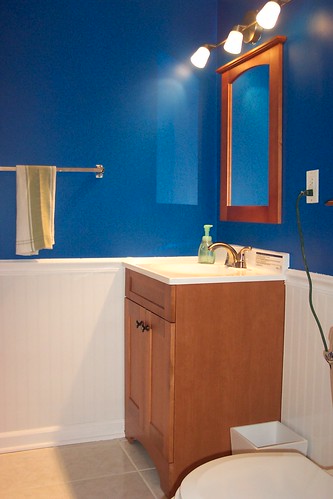
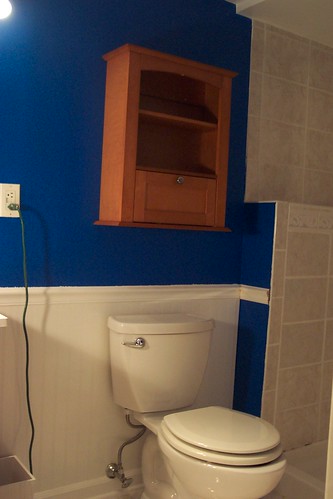
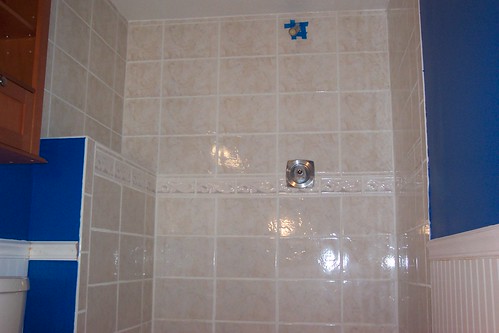
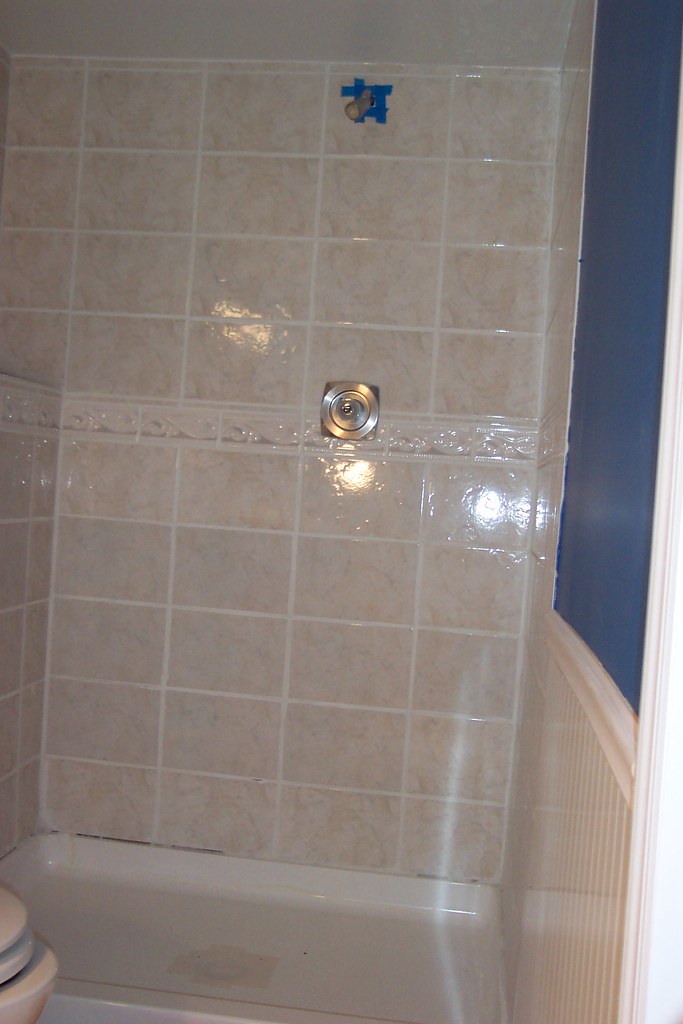
Well, it has been a long time, hasn't it? I just wanted to give an update here. For the past month, I have been renovating a bathroom in my house. When I started, all I had was rough-in plumbing, four walls studded, and a concrete floor. Here is the current status:


Obviously, I have some "fit and finish" work to do; installing molding, shower fixtures, painting, etc. So I will not be at full blogging immediately. I will get back to posting, and as the work diminishes on the bathroom, you should see more regular updates.

05 May 2007

A Manufactured Correction

In the May 3, 2007 edition of the Columbia Flier, Barbara Russell wrote a letter to the editor (Party endorsement in village election sets bad precedent) that begins as follows:

I am writing to correct a statement that was attributed to me in the Columbia Flier's coverage of the recent election for Columbia Council representative for Oakland Mills. The April 26 article "New wave on CA board" indicated that I agreed that the endorsement of my opponent sent out by the county executive, the County Council chairman, a delegate to the General Assembly and a former county councilman who was appointed to his current position with the county by the county executive -- all leaders of the county Democratic Party -- was not political. I did not say that.

Reading the above paragraph, most would sympathize with Barbara. However, it should be noted that Barbara Russell’s statement above combines two sentences from two different paragraphs from the article in question. For reference, I have provided the text of the article below, and have added in bold face the two sentences that Barbara Russell references.

Russell, who had not faced an opponent since 2001, was re-elected to an eighth one-year term in Oakland Mills, defeating Ian Kennedy, 302-193.

Russell won despite Kennedy's extensive list of endorsements from Columbia Democrats County Executive Ken Ulman, Del. Guy Guzzone and Howard County Council Chairman Calvin Ball. "I got the endorsement that I want and that is the endorsement of the people of the village," Russell said.

Last October Russell, a registered Democrat, crossed party lines and endorsed Republican Christopher Merdon for county executive against Ulman. But according to Russell and the politicians, the endorsements had nothing to do with county politics.

The first bolded sentence refers to the endorsement of Barbara Russell’s opponent, Ian Kennedy. In this paragraph, reporter Andrei Blakely quotes her directly. In my opinion, her quote in this paragraph is a brash, dismissive statement of a person that has won an election.

The second bolded statement is in a paragraph recounting Barbara Russell’s endorsement of Christopher Merdon for County Executive. Barbara is quoted indirectly here, but the statement appears to be in keeping with statements made last fall regarding her endorsement for County Executive.

What Barbara Russell’s motive was to write the letter is only for her to answer; however, it appears that Barbara Russell, having won the election to be a CA Board Member (and recently appointed Chair of the Board of Directors, kudos Barbara!) either deliberately selected parts of the article to artificially make her point or did not take the time to read the content of the article.

In the balance of her letter to the editor, Barbara Russell opens up her argument to the general case and goes on to say:

[t]his is not about the past election as much as it is about future elections. This is the first time in my memory that leaders of a major political party have joined together to affect the outcome of a local village community association election. I think that sets a bad precedent. The community association elections have been non-partisan in terms of the major political parties and I strongly believe they should remain that way.

While I respect the right of any individual to endorse or support a candidate for any elective office -- and as an individual I have done so myself -- I believe that the residents of Columbia's villages and the Columbia Association itself are not well served by political party endorsements or the appearance of political party endorsements. And, judging by the comments I have received from my constituents, I believe there are many people who agree with this position.

If Barbara Russell is committed to this point of democratic leader interference in Village elections, why the omission of State Delegate Liz Bobo (D)? The Liz Bobo endorsement is raised in the same Columbia Flier article. As a former Howard County Councilperson, former County Executive, and long tenured state delegate, isn’t State Delegate Liz Bobo THE democratic party leader in this county? Given that those who endorsed Barbara Russell’s opponent did so as private citizens, and Delegate Liz Bobo chose to use state funded resources to issue her endorsement, wouldn’t this be an even more egregious “bad precedent?”

In closing, I am also at a loss as to why the Columbia Flier would publish such a letter to the editor. As I have shown, Barbara Russell appears to have selected quotes (and omitted others) from different parts of the news article referenced to make her point. I would think the editors would stand by their staff’s reporting.

28 April 2007

Responding to Delegate Liz Bobo

In her Friday, April 20, 2007 email, Delegate Bobo states:

In sharp contrast to his opponent, Phil has been strong in his support for Mary Kay Sigaty's proposals for a 150 foot height limitation in Columbia. His opponent is on record as favoring unlimited building heights.

Unlimited building heights? In my opinion, that is a pretty dramatic statement. The only problem is, I never said it. Not in public, not in private. I have never written it. I have never text messaged it, I have never IM’ed it. The statement is not mine.

Since Delegate Bobo sent out her pre-election email, she has been quoted in the Columbia Flier as follows:

Bobo said April 24 that she saw Santos' name on a petition from the group Bring Back the Vision, which advocates no height limits on downtown development, and based her comments on that document.

An interesting thing about the petition, it does not mention “unlimited” building heights. What the petition does state is an opposition to the proposed zoning amendments, and also provides supporting arguments as to why the proposed zoning amendments would be detrimental. It is this language that led me put my name on the petition. To come to the conclusion of “unlimited” building heights based on the petition implies that Delegate Liz Bobo erroneously read something into the document that does not exist on the paper.

Moreover, even basic research concerning my position on building height is readily available. As an example, Google the following search terms:

Santos building height

My blog posts on building height comes up as the second term listed. These posts have been on this blog for months, and clearly state my position.

Lastly, has this town become too big for neighborly discussion? I know that Delegate Liz Bobo has my contact information. I received her legislative update via email the other day. If Delegate Liz Bobo wanted to know my position on building height, why not just contact me directly? I believe it would have been quicker and would have provided her with primary source information.

26 April 2007

In Memoriam

Due to the loss of life in Running Brook today, I will not post today. Let us take a moment for reflection.

24 April 2007

Responding to Delegate Liz Bobo

In her Friday, April 20, 2007 email, Delegate Bobo states:

I am not aware of Phil's opponent's having contributed in any positive way to the efforts to make sure that further Downtown development enhances our community.

It appears that there are three criteria to refute Delegate Bobo’s above claim:

  • I must have contributed to downtown development
  • That contribution must have been positive
  • Delegate Bobo would have to be aware of the positive contribution.

Although only Delegate Bobo can provide with any certainty whether the above criteria has been met, it must also be considered that the statement is somewhat open to consideration to the reader, a Wilde Lake resident. Delegate Bobo does hint at the criteria for “contribution” in her previous statement in her email. She alludes to Phil Kirsch’s attendance at the Charrette and his attendance at the Focus Group meetings.

Contributing to downtown development (that further enhances our community) can take several forms. The simplest form of contribution is to show up. To attend meetings, witness, and provide support. Beyond showing up, contributions can also include speaking out, signing petitions, and in more formal settings, providing oral testimony. Beyond attending meetings and rallies, contribution can be performed through writing to organizations, letters to the editor, and blogging. Please find below a brief synopsis of my contributions to downtown development to date:

Fall 2002 – I attended a Wilde Lake Village Board meeting regarding the proposed construction of the Evergreen apartments. I voiced concerns about traffic congestion, pedestrian access to and from the Mall, and concerns about new neighbors in close proximity to Merriweather Post Pavillion.

Spring 2003 – As a Wilde Lake Village Board member, I participated in a discussion on whether to support the Rouse Company petition to increase the density of Columbia from 2.35 residential units (ru)/acre to 2.5 ru/acre. I (as did the other board members) voted in opposition to the density increase.

Spring/Summer 2003 – As a Columbia resident, I participated in the Zoning Board hearing regarding the Rouse Company petition to increase the density of Columbia from 2.35 ru/acre to 2.5 ru/acre. I presented testimony to the Zoning Board in opposition to the proposal. I also cross-examined supporters of the proposal, including then Rouse Company Vice-President Dennis Miller.

Spring/Summer 2003 – I also became a supporter of Save Merriweather. I still wear my T-shirt to this day with pride.

Spring 2005 – I attended the General Growth Properties Downtown Columbia Town Meetings (1 and 2). I submitted several questions to the presenters and was singled out by then General Growth Properties Vice-President Dennis Miller for repeatedly asking about water and sewer infrastructure, and the specific plans for the increased demand.

Fall 2005 – I attended all Charrette meetings and participated to the fullest extent possible. On the 2nd night, during resident input, I spoke out regarding the so-called “secondary study area,” the piece of land that is bounded by Little Patuxent Parkway, Harpers Farm Road, Twin Rivers Road, and Governor Warfield Parkway. This area contains the Wilde Lake Village Center, condominiums, and affordable housing complexes. I was concerned that the “secondary study area” was, according to Charrette event organizers, slated for development on a much shorter time horizon (10 years) than downtown development and no resources had been committed or discussed.

January 2006 – I attended Delegate Liz Bobo’s Town Hall meeting regarding downtown development. Because of a shortage of seating, I literally sat at her feet. I signed her petition calling for:

specific, hard data relating to housing, schools, traffic, roads, water and sewer, environment, fiscal responsibility, as well as phasing and monitoring of the proposed development be studied and made available to the public BEFORE the Draft Master Plan for Downtown Columbia is presented to the Planning Board and the County Council.

February 2006 – I attended the Post Charrette Town Hall Meeting. During the resident statement section of the program, I spoke out for the need to change the Howard County Board of Education site in Faulkner Ridge back to an elementary school site to support children that may potentially live in the downtown area in the future. I also proposed that if any new streets are to placed in downtown Columbia, the streets should have their names taken from the works of Michael Chabon, a Pulizer Prize winning author that grew up in Columbia.

March 2006 – I attended Delegate Liz Bobo’s small group workshop on downtown Columbia at Kahler Hall. I listened, asked questions (specifically about traffic) and discussed the issues with people after the meeting.

Spring/Summer 2006 – I became a member of the Wilde Lake Downtown Task Force. I participated in discussions about public safety, making Governor Warfield Parkway a scenic road, traffic and schools. I provided meaningful input for a survey created by the task force. It should be noted that the Wilde Lake Downtown Task Force is one of two groups that takes credit for getting the Governor Warfield Parkway/Scenic Road question asked at the Kahler Hall 2006 Candidates Night for County Executive/County Council.

March 2006 – October 2006 – I attended a few Focus Group meetings. For those that do not recall, the meetings were held during normal working hours, and made it difficult for those that work standard hours to attend. Initial meetings did not allow resident input. I also downloaded all Focus Group presentations and documents. I reviewed the documents and participated in the Focus Group by emailing the Howard County Department of Planning and Zoning with my comments.

September 2006 – I started the Columbia Compass blog and addressed (among other things) issues related to downtown development and building heights.

In addition, I have used my blog to track the work of General Growth Properties in other areas of the nation. I have also tried to keep abreast of the presentations they have made at national conferences with regard to mixed use development. I believe that their work in other areas may provide insight into their plans for downtown Columbia. I know of no other person doing this type of research.

October 2006 – I attended a Howard County Council meeting and testified in favor of making Governor Warfield Parkway a scenic road.

Winter 2006/2007 –I attended all of the General Growth Properties/HCC sponsored Voices of Vision lecture series. In addition, I submitted written questions to the guest speakers and also posted blog entries based on Ann Forsyth’s and Adam Lerner’s lectures.

What is positive?

Once again, positive is a somewhat subjective criteria. Without any further definition, it is difficult to determine what is absolutely positive and what is not. In an effort to address the charge, I will provide a brief list of at least what I would define as positive aspects of my contributions:

  • Attending meetings at the village, city, and county level with regard to downtown Columbia.
  • Testifying against and cross examining supporters during the 2003 Rouse Company petition to the Zoning Board to increase density without a specific, detailed plan.
  • Signing Delegate Bobo’s petition for data on traffic, housing, water and sewer, etc…
  • Testifying in support of the Governor Warfield Parkway scenic road resolution.
  • Attending the Charrette.
  • Participating in the Focus Group discussion.
  • Asking questions at meetings about key areas, such as density, traffic, water and sewer service, affordable housing, etc…
  • Originating the idea for naming streets from the works of Michael Chabon.
  • Advocating for the return of Faulkner Ridge elementary school to support educating children who may move into downtown.

Awareness

With respect to Delegate Liz Bob’s awareness of my contribution to the downtown discussion, I am at a loss. Suffice it to say, at almost every meeting listed above, Delegate Bobo and I had the chance to say hello to each other. For more specific data:

At the Wilde Lake Village Board meeting regarding the construction of the Evergreen apartments, I sat directly behind Delegate Bobo and her husband.

I believe Delegate Bobo was in the room when I testified at the Zoning Board in opposition to the Rouse Company density increase. I know she was in the room when former Rouse Company Vice-President Dennis Miller testified and was cross-examined (by myself and others).

During the Charrette, I recall two specific instances in which Delegate Bobo and I had contact: The first was during the speakout portion of the Charrette, I had asked the question about the secondary development area in the following way – “I want to thank the Design Collective for all their hard work over the last two days, but I have some concerns…” After my time at the mike, Delegate Bobo came over to me and said that she really enjoyed the way I ask questions. Secondly, during the third meeting activities, we were broken up into small groups, and I was in a group with Delegate Bobo’s husband. I recall this quite clearly, because it was at that time that I lent him my copy of Ann Forsyth’s book Rebuilding Suburbia, a book that describes (among other cities) Columbia’s development and rates it against New Urbanist development (we do pretty darn well, by the way).

At her January 2006 Town Hall meeting, I not only sat at her feet, but I was the one who gingerly, carefully, carried her Mort Hoppenfeld print to her car. At her March 2006 downtown workshop, I commented that I had seen in the press and heard among people that they were “angry” about downtown development, and asked Delegate Bobo how to reduce this kind of language. She responded that she hoped that she had not used the word angry, and asked that I count the times she used the word. She also asked that I count the times she used the words peace and hope.

I suppose all of this could have been forgotten, but I believe Delegate Bobo is a smart person and has a sharp mind. Given this level of interaction, I would have to believe that she is cognizant of these past interactions.

In summary, I believe that I have presented a wealth of contributions to the downtown discussion, most of it positive in nature, and at least some of it in direct interaction with Delegate Bobo. So I will respectfully ask at this point, why would she write such a statement?

Delegate Liz Bobo

As a former candidate, I understand that negative campaigning is part of the deal; however, I believe the misrepresentation of my positions and mischaracterization of my actions by Delegate Liz Bobo leaves a decidedly false impression with the residents of Wilde Lake. I feel it is necessary to post her email and provide the community with my actual positions and actions to restore my name.

In a message dated 4/20/2007 2:23:32 P.M. Eastern Daylight Time, Delegate.E.Bobo@house.state.md.us writes:

Dear Friends,

I have given a lot of thought to whether to send this message to people I know who live in Wilde Lake. My conclusion is that there is too much at stake not to send it.

Lloyd and I own property in Wilde Lake, and we are voting for Phil Kirsch to be re-elected to the Columbia Association Board of Directors. Voting is a personal action, I realize, and I want to share our reasoning with you.

The future development of Downtown Columbia is by far the most important issue facing us. Phil Kirsch has been involved in the process from the beginning, attending the Charrette and then serving with me as a member of the County's Focus Group. He has made it clear that further development should benefit those of us who are already here, not just the developers.

Phil advocated with me in insisting that the county have a thorough traffic study performed before moving forward with its plans for 5500 new residential units in Downtown. That traffic study revealed that such a plan would result in gridlock. Phil played a key role in advocating for the county to designate Governor Warfield Parkway as a scenic road to protect its beautiful trees and median. As a result, the county can no longer make this road the main through way to handle Downtown traffic.

I am not aware of Phil's opponent's having contributed in any positive way to the efforts to make sure that further Downtown development enhances our community.

In sharp contrast to his opponent, Phil has been strong in his support for Mary Kay Sigaty's proposals for a 150 foot height limitation in Columbia. His opponent is on record as favoring unlimited building heights.

During this development process it will be more important than ever for the Columbia Association Board to do the people's work in an open manner. They have held too many closed meetings in recent years. More than any other member, Phil Kirsch has voted to keep CA meetings open.

As an elected representative myself, I found it quite disturbing that Phil's opponent recently publicly called for the removal of two CA Board members who had come out in support of a candidate in last fall's election. Though that candidate was of a different political party than mine, I fully support the right of all individuals to engage in the political process and to support the candidates of their choice. The two CA Board members were completely exonerated, and should never have been castigated in that way.

Phil Kirsch has demonstrated that he is a hard working, independent representative who does not seek the limelight. He has the courage of his convictions and puts the people's interest over those of the CA corporation. We need Phil to continue his fine work.

Please join us in voting for Phil at Slayton House tomorrow, Saturday, April 21, between 9am and 3pm. Please encourage your neighbors to do likewise, as turnout will be crucial in this election.

I look forward to continuing to work with you to make Columbia an even better community.

~Liz

23 April 2007

Election recap

As most in the Columbia, Maryland vicinity already know, I lost the Wilde Lake Columbia Council Representative election on Saturday. I would like to thank the residents of Wilde Lake for inviting me into their homes over the last month to talk about the issues. I would like to thank the Wilde Lake Election Committee for conducting the elections well. Lastly, I would like to thank Phil Kirsch for conducting himself well during this campaign season. Regrettably, one of his supporters mounted a (relatively) large negative campaign at the last minute and misrepresented both my experience and my position on issues (more on this later).

So with the one exception, let us all move forward as a Village, community, and city to make Columbia a great place to live now and in the future.

17 April 2007

An Eleventh Hour Suggestion

Just wondering. It is not normal protocol, but perhaps the County would see its way to televise the Planning Board hearing tonight. Considering (even with carpooling) that parking will be a premium tonight, using television would make the hearing available to an audience beyond the capacity of the Banneker Room.

In other news, the Wilde Lake Village Board and Columbia Council Representative candidate's night is tonight at Slayton House.

02 April 2007

The Current Alternative to Downtown Development

Ok, we are almost into Tuesday of this week, but there was and article in last week’s Columbia Flier (Restaurant park open for business, Plaza offers wide variety of fare) by reporter Mike Santa Rita that has been bugging me.

The article relates the new food offerings at a strip mall development (the “MaGaw Plaza”) tucked between Apple Ford and Gramaphone on MaGaw Road. This collection of eateries (and a JHUAPL Credit Union) is billed as:

The site is designed to attract a lunch crowd from nearby office buildings and evening diners from surrounding residential neighborhoods, as well as patrons of the United Artists movie theater on nearby Robert Fulton Drive, according to [Manekin Senior Developer David] Meiners.

"We tried to get a mix of variety so there are different types of food to suit different tastes," Meiners said. "We're pretty comfortable that somebody could go to dinner at Greene Turtle and get a coffee at Orinoco and a dessert at Smoothie King."

My primary concern is the lack of connectivity. Yes, there are some sidewalks nearby, but most just end and do not easily link the nearby office buildings. The result is that most patrons, either lunch or dinner crowd, will be driving to the strip mall and driving away after. It seems that is the only way to use the center.

Secondly, the variety of fare offered is a little disappointing. In the interest of full disclosure, I have been to Greene Turtle and Orinoco (once, each, not in the same day), but an auto-dependent retail center that traffics in hamburgers, pizza, and burritos seems to be two wrongs that don’t make a right. (OK, yes, Greene Turtle has some salads, Atlanta Bread is not a really not a den of cholesterol)

Moreover, with very similar establishments nearby, we have to be near saturation in the fast-casual market. With respect to hamburgers, we already have a Ruby Tuesdays, Red Robin, Rocky Run, and Fuddruckers; all which have extensive hamburger menus. In the world of burritos, the Snowden Corridor already has Chipotle’s, Qdobas, Baja Fresh, Frisco Grille and Cantina (really, the only choice for burritos in Columbia), and now California Tortilla.

Lastly, the strip mall sits on land that was once designated the “Owen Brown Industrial Park.” This area was supposed to contain light manufacturing concerns and warehouses. Where people would be paid a wage that would allow some to live reasonably nearby. Now this piece of land contains many jobs that pay the minimum wage (or less for waiters).

As I said before, I have visited the establishments there, and will one day return. I’m just not feeling too good about it. Save me a parking space.

Destination: Consumption

Now that it is April, we can look forward to Downtown Columbia Plan Season. As noted here, General Growth Properties plans to unveil its plans for downtown during April, May, or June. Howard County is also expected to put forth its plan during the same timeframe. So what can we expect? Clearly, all theories are pure speculation at this point; however, there are some guideposts that will allow some educated tea-leaf reading.

Earlier this year I posted a piece on General Growth Properties expansion of the Natick Mall. This project included an expansion of retail and dining at the Natick Mall and the construction of Condos on the mall property. Given the similarities between Natick and Columbia, I believe it is possible that General Growth may attempt to replicate the Natick project here as part of their stated intent to expand the mall. I believe the tell-tale sign will be if General Growth proposes to change the name of the Mall in Columbia. In Natick, General Growth first attempted to change the name from “Natick Mall” to “Natick.” After experiencing local opposition, General Growth settled on the name “the Natick Collection.”

Another piece of the puzzle may have been revealed at the March 8-9, 2007 Hotel Developers Conference in Rancho Mirage, CA. As reported on HospitalityNet, representatives from General Growth Properties touted the success of hotel/mixed use development.

Hotel mixed-use has emerged as one of the few ways hotel developers may be able to make a new development economically feasible, with skyrocketing construction costs. It has also become one of the hottest things going as developers of other real estate uses (shopping centers, office, retail, residential and entertainment) discover the big “IRR Premiums” that may harvested from well-planned and tightly integrated hotel mixed-use projects.

And that is why General Growth Properties (one of the largest owners of shopping malls in the world) is looking at its 200+ malls and retail centers to see where it can accomplish superior results — and believes that it may have identified 80 opportunities.

The above-linked piece on HospitalityNet.com also includes slides direct from General Growth Properties to describe the magnitude of profit to be made with hotel/mixed use. I strongly encourage all to link and view, but here is a summary (as reported on HospitalityNet.com):

  • General Growth Properties has found that 32% of U.S. domestic leisure travel activities are spent on shopping. This represents a trip volume of 490.1 million trips, with an average of $372 per household spent on each trip (excluding the transportation). An amazing 77% of those trips were overnight, and averaged 2.9 nights at a hotel.
  • Understanding this in the terms of a specific project, like the Dallas Galleria Mall is an interesting exercise. This chart shows how only 32% of the Dallas Galleria’s business came from local shoppers, and 32% of the business came from customers 50 miles away or more.
  • the benefit of hotel mixed-use flows both ways — each component of the mixed-use project enhances and improves the other. So here is GGP’s analysis of the enhanced performance of its office component at The Woodlands, their MPC in Houston.
  • Certainly some of the benefit is attributed to superior product, and to limited supply in a Master Planned Community. Nonetheless, a 1% vacancy factor compared to 12-14% in the immediately surrounding market areas, and average rent premiums of at least 30% are pretty strong evidence for the value of hotel mixed-use. (These figures -- and others --shared by GGP execs at The Hotel Developers Conference® earlier this month created a flurry of interest among participants!)
  • And if the earlier synergies of leisure travelers loving to shop were lost on you, here is a chart showing how GGP figures that its retail sales increased by more than 403% from 1995 to 2006 — at least in significant part because of the hotel mixed-use nature of the project (and also all the usual developer’s points of pride, including superior design, location, and exclusivity created in an MPC[Master Planned Community]).

Once again, I have to stress that any connection between the above mentioned material and Columbia is purely speculation; however, if this was presented with an eye toward the “garden of people,” where would this type of development find itself in Downtown Columbia? If I was using house money, I would say that it would wind up on the Crescent Property.

Taken to the hypothetical end, we need to start asking some serious questions here. Not just questions about height or number of traffic lanes, but deeper, fundamental questions. Would this type of development be complimentary to Columbia in any way? Would a boutique or five-star hotel, with possible condos and surrounded by retail become an island, or could it be integrated into the general pedestrian plan?

Beyond these (and other, unmentioned questions), a broader class of questions should also be addressed. Columbia was founded and has been in my lifetime an experiment that has resided in the alchemist wing of modern planning. Whether it is mixed income housing, interfaith centers, or the village concept; we the population of Columbia expect innovation and typically deride the importation of ideas from elsewhere. At what point would condos at the Mall in Columbia become our own and not be “Natick South?” Where is the dividing line between a hotel/condo/retail complex that is truly Columbian, and not just “the Woodlands on the Little Patuxent?”